ابزار وبمستر

How is chest pain treated? Chest pain treatment depends on the cause of the pain. If a heart attack is causing your chest pain, you'll get emergency treatment as soon as you seek help. This can include medication and a procedure or surgery to restore blood flow to your heart.

Chest pain is a common medical symptom that paramedics attend to in the out-of-hospital environment.

Anxiety chest pain is a stabbing pain in the chest brought on or intensified as a result of a panic attack or other anxiety-related episode. If you're experiencing these symptoms, you can practice breathing exercises, eat healthier, avoid caffeine, and seek professional therapy to alleviate these symptoms.

Maintaining general health - Performing regular exercise, managing stress with proper techniques and coping strategies, getting enough sleep and eating a well-balanced diet may also prevent the recurrence of panic attack symptoms like chest pain.

What is the most common cause of chest pain in children?

Most children complaining of chest pain have musculoskeletal chest pain, which is pain originating from the muscles or bones in the chest, and their connections. There are three common causes of musculoskeletal chest pain:

  • A spasm or cramp of the chest wall muscles and nerves. These come and go and can be quite painful. These pains are sometimes referred to as “precordial catch syndrome".

  • ​Coughing really hard or often during a cold can also cause chest pains.

  • “Costochondritis" is pain caused by inflammation of the cartilage connecting with the bones of the chest.

Musculoskeletal chest pain is not due to any problem with the heart and is not dangerous. Pain medicines like ibuprofen can help relieve the pain and reduce any inflammation that is present. Talk to your pediatrician about how to safely use ibuprofen and any other pain medicines.

What else causes chest pain in children?

Other common causes of chest pain include:

  • Pneumonia (lung infection) can cause irritation around the lungs that can be quite painful, especially with breathing. This is sometimes called pleurisy.

  • Children sometimes describe their breathing difficulties from asthma as chest pain.

  • Acid reflux from the stomach up into the esophagus can burn and feel painful. This is called gastroesophageal reflux disease or heart burn.

  • Some children describe emotional responses to stress and anxiety as chest “pain". Others may complain of discomfort to gain attention. Your pediatrician may determine this as the cause of your child's chest pain by a process of elimination.

  • In rare cases, a heart problem will cause chest pain in children.

​Warning signs that should raise concern for a heart problem:

  • ​​Chest pain during physical exerti​​on, exercise or activity​

  • Chest pain and pressure that does not go away

  • Chest pain after an unexpected decrease in the ability to exercise over days to weeks

  • Chest pain that is followed by passing out or nearly passing out

  • Chest pain in children born with heart defects (congenital heart disease)

  • Chest pain in children who have had Kawasaki disease

  • Chest pain in children who have a genetic cause of high cholesterol

  • Chest pain in children with a family member who died of unexplained reasons

  • Chest pain in children with a family member who has cardiomyopathy

Reference:

  • basepointacademy.com/anxiety-chest-pain
  • magonlinelibrary.com/doi/abs/10.12968/jpar.2022.14.1.16?journalCode=jpar

26 ways to avoid getting sick this winter

Come on, it's not the end of the world.

1. Take Your Fight-amins

Your vitamin D levels may run on E in winter. That matters: D can spur your body to fight off colds. In fact, taking 10,000 IU of vitamin D3 a week may cut your risk of upper respiratory infection in half, say Canadian researchers.

2. Stop Touching Yourself

Unless sterile surgical gloves are part of your winter wardrobe, keep your mitts off your mug. People who occasionally touch their eyes and nose are 41 percent more likely to develop frequent upper respiratory infections than hands-off folks, a 2013 study in the Journal of Occupational Health found. And if you think hand sanitizer is the answer, we refer you to #17.

3. Say Hello to Yogurt

Cold and flu viruses might have an Achilles' heel: Greek yogurt. In a study published in Clinical Nutrition, people who consumed a specific strain of probiotics daily reduced their risk of catching one of these bugs by 27 percent. Aim to eat at least one serving a day of a Greek yogurt with live cultures, suggests Spencer Payne, M.D., an associate professor of rhinology at the University of Virginia School of Medicine.

4. Refill Your Meditation

We'd like you to contemplate perfect health. Researchers from the University of Wisconsin at Madison found that people who meditated took 76 percent fewer sick days than those who were not so zen. Meditating trains you to stay focused and calm, which helps alleviate stress that can leave you vulnerable to infection. To get started, try the brief mindfulness sessions available for free at marc.ucla.edu.

5. Nail Your Tea Shot

Skip the black coffee and brew some green tea. Its magic ingredient, a catechin called epigallocatechin gallate (EGCG), can damage influenza virus particles and stop them from entering your system, a German study reveals. The scientists believe this kick-ass catechin may also interfere with pneumonia-causing bacteria. Knock back as much green tea as you want, or take a daily EGCG supplement, say study authors Joerg Steinmann, M.D., and Eike Steinmann, Ph.D. Try the Now Foods 400-milligram tablets.

6. Order a Shot

"The number one thing you can do to prevent the flu is get vaccinated," says Bill Schaffner, M.D., a professor of preventive medicine at Vanderbilt University. Even if another strain infects you, the shot may reduce symptoms.

7. Train on Time

Hit the gym before your jab. When you exercise prior to receiving a flu shot, the post-exercise inflammation boosts your body's immune response to the virus in the vaccine, according to a study review in Brain, Behavior, and Immunity. That translates to more powerful infection protection. How much sweat is enough? A British study found that people who performed 25 minutes of lifts targeting their biceps and deltoids were able to increase their immune response.

8. Start Nasal Maneuvers

Freezing your butt off? Worry more about your nose. The cilia in your nasal and sinus cavities sweep away illness-causing pathogens, but the rate at which the cilia move is affected by temperature, says James Palmer, M.D., director of the division of rhinology at the University of Pennsylvania. "When cilia are warmed up, they beat a little faster, and when it's cold they beat more slowly. So spending a lot of time in the cold may make it easier for you to get sick." That is, unless you breathe through a scarf.

9. Boil Over

Viruses that cause foodborne illnesses tend to loiter on produce. So to further slash your chance of sickness, try blanching your greens--kale, spinach, and chard, for example--in boiling water for two to three minutes. Then dunk them into ice water to stop the cooking. (Blanching can give your greens a different kind of flavor.) Heating to 212°F greatly reduces norovirus in spinach, a study in the Journal of Food Protection reports.

10. Refuse the Booze

UMass Medical School research suggests that one binge-drinking session triggers a flood of cytokines, proteins that can induce fever and increase inflammation. Any more than five drinks in two hours is a binge, the CDC says.

11. Break Your Dry Spell

It isn't enough just to keep your nose cozy (#8)--there's a moisture mandate too. If your nasal passages are dried out, their natural antimicrobial properties will suffer, says Dr. Payne. "Try to keep the humidity level in your home between 30 and 50 percent." When you're at work, spritz your schnoz three or four times a day with a saline gel or spray like Ayr Saline Nasal Mist ($3, drugstore.com).

12. Sweat Out a Cold

Moderate exercise is nothing to sneeze at. In fact, it can slash your risk of catching a cold by 27 percent, Korean researchers report. Working out switches on your immune response, possibly by sending a cascade of "natural killer cells" to hunt the rhinovirus. Already ill? Keep exercising, Dr. Schaffner advises. "Exercise stimulates the production of epinephrine, which constricts blood vessels in and around your mucous membranes and can relieve nasal discomfort."

13. Teach Yourself to Fish

Note that we said "moderate" exercise in #12: Strenuous workouts can leave you vulnerable to infection. But if you want to keep up the intensity, at least fill your plate with fish. A 2012 study in Brain, Behavior, and Immunity found that increasing your omega-3 intake can spur postexercise production of infection-fighting cells, which can help protect against certain infections. Tired of tuna melts? Top your pizza with anchovies.

14. Say "Hum Bug!"

Humming may annoy other people a bit, but it really annoys germs. "Humming has been shown to increase nitric oxide in the nose, which is antimicrobial," says Dr. Payne.

Try this technique from an Indian study: Take a deep breath, close one nostril, and exhale out the other nostril as you hum. Repeat on the other side. Do this five times. Allergy sufferers who tried it after using a steroid nasal spray twice a day for three months felt about half as congested as those who only used a spray, the study reports.

15. Arrest a Hacker

Menthol always gets the cough-quelling props, but where's the love for eucalyptus? A study in the aptly named journal Cough reports that cineole, a compound found in eucalyptus, can help ease your cough symptoms, possibly by reducing inflammation and helping the bronchi in your lungs expand, increasing airflow as a result. When people suffering from acute bronchitis took 200 milligrams of cineole before each meal, their symptoms improved 22 percent more than a placebo group's did. Try SinuCare soft gels, which contain cineole.

16. Steep Gingerly

Swallow some ginger for what ails you. Researchers in Taiwan have discovered that fresh ginger can inhibit respiratory syncytial virus from attaching to cells and may even reduce its ability to replicate. So what in the world is respiratory syncytial virus? Just a bug that in severe cases can lead to bronchiolitis or pneumonia. Grate some ginger in hot water for a spicy tea, or add it to your next stir-fry with vegetables and garlic.

17. Wash Your Hands of It

It takes a good scrub with soap and water to actually rub a virus off your skin, Dr. Payne says. That means 20 seconds at the sink and a thorough drying: Wet hands are more likely to spread germs than dry ones, notes the CDC.

18. Go to the Mat

Pretzels for immunity? Scientists in Japan speculate that twisting yourself into yoga stretches may help boost your immune defenses, which in turn can better prepare you to fight illnesses like pneumonia, colds, and the flu. The combo of relaxation and physical activity triggers an increase in saliva levels of beta-defensin 2, an antimicrobial peptide that breaks down invading microbes. Just one 90-minute yoga session doubles beta-defensin 2.

19. Carry a Loaded Gum

Freshen your breath and stop bugs in their tracks. Past research shows that xylitol, a sweetener in some chewing gums, can prevent Streptococcus pneumoniae from establishing a stronghold in your body. And now a review from Turkey concludes that xylitol can reduce your risk of ear and sinus infections. Try Ice Breakers Ice Cubes, which contain 1,200 milligrams per piece.

20. Cover Your Wiener

Sauerkraut may provide sweet relief. Researchers in Italy report that Lactobacillus plantarum, a type of probiotic found in such fermented foods as kraut and kimchi, may reduce the potency of a certain kind of strep bacteria. The L. plantarum triggers a protein that helps control inflammation while simultaneously slowing bacterial growth. Give your sandwiches and hot dogs a kick by layering on King's Kimchi or Gold Mine's Organic Raw Sauerkraut.

21. Hibernate for Health

A shuteye deficit can be a nightmare for your immune system: According to a 2013 study conducted in Finland, a single workweek of less than four hours of sleep a night can alter the way your genes function, changing pathways that switch on your immune response and potentially increasing inflammation. For a better night's rest, consider changing up your bedroom lighting with a bulb that can help you reach dreamland faster.

22. Don't Smoke

Time to take a permanent cigarette break. Lighting up leaves your body vulnerable to the flu, say Korean researchers. Smoking raises a person's odds of catching the H1N1 bug, a.k.a. swine flu, more than fivefold.

23. Breathe Easier

Not a smoker? Good. Now don't hang around with anyone who is. Scientists in India report that when people breathe in even a small amount of smoke, their nasal cilia need more than double the time to clear particles, compared with people who haven't been exposed to secondhand smoke--which can increase vulnerability to respiratory infections.

24. Embrace Your Honey

That green tea we recommended (#5)? Here's your sweetener. A study in the journal Microbiology found that when colonies of Streptococcus pyogenes--the strep throat bug--were treated with manuka honey, the bacteria count fell by up to 85 percent. And a 2014 study from Pakistan found that the sticky stuff may also inhibit forms of staph, pneumonia, and salmonella.

25. Heat Smart

Does green tea make you gag? Think ginger (#16) is genuinely disgusting? We don't care what you brew, as long as you down something hot. People who drank a piping hot (165°F) beverage felt rapid improvement in more of their cold and flu symptoms than those who downed fluids at room temperature, according to a study published in the journal Rhinology.

26. Boost Your Herb Appeal

Adding rosemary to a dish means you're also sprinkling in an antiviral ingredient: carnosic acid. This compound helps shield your body from respiratory syncytial virus (see #16) by interfering with its ability to infect its ability to infect a host and replicate, a Korean study found. Shake the herb over roast chicken.

Reference: today.com/health/26-ways-avoid-getting-sick-winter-1d80290214

Sneezing Is The Best Thing That Ever Happens To You

Sneezing is great for you! Contrary to the myths and misinformation you may have heard or read about, sneezing is actually a rather great thing. Furthermore, I’m sure that if we weren’t born with the sneezing reflex, we would have had to invent it. So sneeze and be happy. Your eyeballs won’t pop out, your heart won’t stop, unwelcome company is not on the way to you, and it is not going to rain.

Does sneezing clear the lungs?

Sneezing protects us by clearing our nasal and bronchial passages and our lungs of dust, pollens, and other irritating substances. Sensors in our noses and sinuses detect the irritants and send a signal to the tiny hairlike cilia that line our nasal passages to expel them.

Sneezing is your body’s way of removing irritants from your nose or throat. It is a powerful, involuntary expulsion of air. While this symptom can be quite annoying, it’s not usually the result of any serious health problem.

Sneezing often happens suddenly and without warning. Another name for sneezing is sternutation. Read on to learn more about why you sneeze and how to treat it.

Part of your nose’s job is to clean the air you breathe, making sure it’s free of dirt and bacteria. In most cases, your nose traps this dirt and bacteria in mucus. Your stomach then digests the mucus, which neutralizes any potentially harmful invaders.

Sometimes, however, dirt and debris can enter your nose and irritate the sensitive mucous membranes inside your nose and throat. When these membranes become irritated, it causes you to sneeze.

Sneezing can be triggered by a variety of things, including:

  • allergens
  • viruses, such as the common cold or flu
  • nasal irritants
  • inhalation of corticosteroids through a nasal spray
  • drug withdrawal

One of the best ways to keep from sneezing is to avoid things that trigger you to sneeze. You can also make some simple changes in your home to reduce irritants.

Change the filters on your furnace to keep your home’s filtration system working properly. If you have pets that shed, you might consider cutting their hair or removing them from the home if their fur bothers you too much.

You can kill dust mites on sheets and other linens by washing them in hot water, or water over 130°F (54.4°C). You might also decide to purchase an air filtration machine to clean the air in your home.

In extreme cases, you may need to get your home checked for mold spores, which may be causing your sneezing. If mold infests your home, you may need to move.

Reference:

  • thegrandhealthcare.com/strokecenter/sneezing-best-thing-ever-happens
  • healthline.com/health/sneezing#medical-treatment
  • Sneezing Has Health Benefits | Life - yankton.net

What causes body aches when you're sick? When you have the flu, a common cold, a virus or a bacterial infection, your immune system jumps into action. It reacts by releasing white blood cells to fight off the infection. The reaction causes inflammation, which can leave your muscles feeling achy.[1]

How to stop body aches from a cold?

Over-the-Counter (OTC) Medicines
Some good choices for pain relief are acetaminophen or NSAIDs like aspirin, ibuprofen, ketoprofen, and naproxen. Both acetaminophen and NSAIDs can lower your fever and ease muscle aches. Some people find that one medicine works better for them than another.
[2]

How to tell if a cold is getting worse?

When to see a doctor

  1. Symptoms that get worse or do not get better.
  2. Fever greater than 101.3 degrees Fahrenheit (38.5 degrees Celsius) that lasts more than three days.
  3. Fever returning after a fever-free period.
  4. Shortness of breath.
  5. Wheezing.
  6. Intense sore throat, headache or sinus pain.[4]

Many parents are worried about their child contracting the flu. Preventing the flu begins with common sense actions, like proper hygiene. Parents play a pivotal role in helping cement these flu prevention habits in their children:

  • Handwashing: Make sure children wash their hands with soap and hot water for at least 20 seconds, especially before eating, after using the restroom, and after sneezing or coughing.
  • Tissues: Stock up and teach children to discard tissues immediately after use and not leave them lying around.
  • Elbow etiquette: If tissues aren’t handy, children should be taught to sneeze or cough into their elbow, not their hands. This reduces the chance of spreading germs through touch.
  • Avoid touching the face: Germs often enter the body through the eyes, nose, and mouth. Educating children on this can significantly reduce their risk, although this might be more difficult for a child.[3]

Reference:

  1. uclahealth.org/news/article/why-your-whole-body-aches-when-youre-sick-and-what-you-can-do-about-it
  2. webmd.com/cold-and-flu/relief-from-cold-aches-pains
  3. loyolamedicine.org/newsroom/blog-articles/how-protect-your-child-flu
  4. mayoclinic.org/diseases-conditions/common-cold/symptoms-causes/syc-20351605

Aspirin, also known as acetylsalicylic acid (ASA), is a nonsteroidal anti-inflammatory drug (NSAID) used to reduce pain, fever, and/or inflammation, and as an antithrombotic. Specific inflammatory conditions which aspirin is used to treat include Kawasaki disease, pericarditis, and rheumatic fever.

Aspirin is also used long-term to help prevent further heart attacks, ischaemic strokes, and blood clots in people at high risk.For pain or fever, effects typically begin within 30 minutes. Aspirin works similarly to other NSAIDs but also suppresses the normal functioning of platelets.

One common adverse effect is an upset stomach. More significant side effects include stomach ulcers, stomach bleeding, and worsening asthma.Bleeding risk is greater among those who are older, drink alcohol, take other NSAIDs, or are on other blood thinners. Aspirin is not recommended in the last part of pregnancy. It is not generally recommended in children with infections because of the risk of Reye syndrome. High doses may result in ringing in the ears.

Why Kids Shouldn't Take Aspirin

A precursor to aspirin found in the bark of the willow tree (genus Salix) has been used for its health effects for at least 2,400 years. In 1853, chemist Charles Frédéric Gerhardt treated the medicine sodium salicylate with acetyl chloride to produce acetylsalicylic acid for the first time. Over the next 50 years, other chemists established the chemical structure and devised more efficient production methods.[1]

What organ can aspirin damage?

Aspirin can cause several forms of liver injury: in high doses, aspirin can cause moderate to marked serum aminotransferase elevations occasionally with jaundice or signs of liver dysfunction, and in lower doses in susceptible children with a febrile illness aspirin can lead to Reye syndrome.[2]

What is aspirin used for?

Aspirin is an everyday painkiller for aches and pains such as headache, toothache and period pain. It can also be used to treat colds and flu-like symptoms, and to bring down a high temperature. Aspirin is known as an acetylsalicylic acid.[3]

Key facts

  • It's best to take aspirin with food. That way, you'll be less likely to get an upset stomach or stomach ache.
  • Never give aspirin to children under the age of 16 (unless their doctor prescribes it). It can make children more likely to develop a very rare but serious condition called Reye's syndrome.
  • You should start to feel better 20 to 30 minutes after taking aspirin.
  • Aspirin is an ingredient in combined medicines such as Anadin Original, Anadin Extra, Alka-Seltzer Original, Alka-Seltzer XS and Beechams Powders.
  • Aspirin as a mouth gel has the brand name Bonjela. Like other aspirin products, it's only for people aged 16 and over. Bonjela Teething Gel and Bonjela Junior Gel do not contain aspirin, so you can give them to children under 16.

To make sure aspirin as a painkiller (including mouth gel) is safe for you, tell your doctor or pharmacist if you:[4]

  • have ever had an allergy to aspirin or similar painkillers such as ibuprofen
  • have ever had a stomach ulcer
  • have recently had a stroke (although depending on the kind of stroke you've had, your doctor may recommend that you take low-dose aspirin to prevent another one)
  • have high blood pressure (hypertension)
  • have indigestion
  • have asthma or lung disease
  • have ever had a blood clotting problem
  • have liver or kidney problems
  • have gout – it can get worse for some people who take aspirin
  • have heavy periods – they can get heavier with aspirin
  • are pregnant, trying to get pregnant or breastfeeding

The benefit of aspirin that set it apart from ibuprofen is that aspirin is considered a blood thinner, stopping platelets from clotting together. This makes aspirin a critical medicine to treat those suffering from cardiovascular disease and recovering from heart attacks and strokes.

However, aspirin carries a greater risk than ibuprofen for causing gastrointestinal side effects, such as peptic ulcers. For this reason, full-dose aspirin shouldn’t be used as a long-term pain relief medication.[5]

What are contraindications of aspirin?

People who are allergic to ibuprofen should not take aspirin as there is cross-reactivity. Patients who have asthma should be cautious if they have asthma or known bronchospasm associated with NSAIDs. Aspirin increases the risk of GI bleeding in patients who already suffer from peptic ulcer disease or gastritis.

Aspirin increases the risk of GI bleeding in patients who already suffer from peptic ulcer disease or gastritis. The risk of bleeding is still present even without these conditions if there is concomitant alcohol consumption or if the patient is on warfarin. Patients who have inborn coagulopathies such as hemophilia should avoid all salicylates. Acquired diathesis, as in the setting of dengue or yellow hemorrhagic fever, should avoid the use of aspirin.

Patients who have glucose-6-phosphate dehydrogenase deficiency are at risk of acute intravascular hemolytic anemia. Many factors can precipitate these hemolytic episodes. Aspirin is one such known cause.

Avoid using aspirin in children who are suffering from a viral infection to avoid Reye syndrome.[6]

Reference:

  1. en.wikipedia.org/wiki/Aspirin#cite_note-Jeffreys2008-12
  2. ncbi.nlm.nih.gov/books/NBK548900
  3. nhs.uk/medicines/aspirin-for-pain-relief/about-aspirin-for-pain-relief
  4. nhs.uk/medicines/aspirin-for-pain-relief/who-can-and-cannot-take-aspirin-for-pain-relief
  5. sunlightrecovery.com/aspirin-nsaids-avoid
  6. ncbi.nlm.nih.gov/books/NBK519032

A runny nose can be caused by anything that irritates or inflames the nasal tissues. Infections — such as the common cold and influenza — allergies and various irritants may all cause a runny nose. Some people have a chronically runny nose for no apparent reason — a condition called nonallergic rhinitis or vasomotor rhinitis.

Human rhinovirus (HRV) is the main cause of the common cold, making up over half of the cases. Despite the prevalence of colds, the immune response to these viruses isn’t well understood. A better understanding could help researchers develop effective therapies against HRV and other cold viruses.[5]

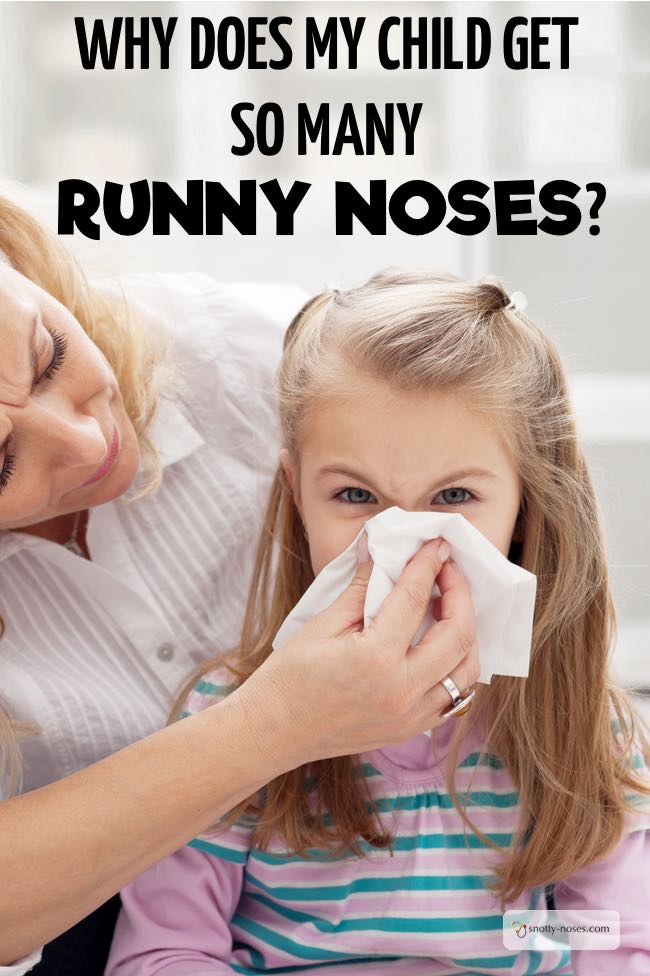
Why do Children always have runny noses? By a pediatrician

Spring Allergy Symptoms

Spring allergens, like tree and grass pollens, can trigger allergy symptoms such as sneezing, runny or stuffy nose, swollen mucous membranes, coughing, and itchy, watery eyes. Just as the amount of pollen can be affected by your location, so can the type of symptoms and severity.[4]

Less commonly, a runny nose can be caused by polyps, a foreign body, a tumor or migraine-like headaches.

Causes of a runny nose include: [1]

  1. Acute sinusitis
  2. Allergies
  3. Chronic sinusitis
  4. Churg-Strauss syndrome
  5. Common cold
  6. Coronavirus disease 2019 (COVID-19)
  7. Decongestant nasal spray overuse
  8. Deviated septum
  9. Cold or dry air
  10. Granulomatosis with polyangiitis
  11. Hormonal changes
  12. Influenza (flu)
  13. Lodged object
  14. Medicines, such as those used to treat high blood pressure, erectile dysfunction, depression, seizures and other conditions
  15. Nasal polyps
  16. Nonallergic rhinitis
  17. Occupational asthma
  18. Pregnancy
  19. Respiratory syncytial virus (RSV)
  20. Spinal fluid leak
  21. Tobacco smoke

Hormones

Pregnant women can experience a condition called pregnancy rhinitis. It impacts between 18 to 42 percent of pregnant women and usually occurs during the first trimester. Blood vessels throughout a woman’s body change during pregnancy and blood can pool in the nasal passages. A runny nose can result from the combined effects of estrogen and progesterone. Exercise and saline rinses are the safest treatments for the health of your fetus. Other treatments for a runny nose could pose a risk to your child, before birth or while breastfeeding. It’s not just pregnancy either. Thyroid and growth hormones can also impact tissue in your nasal passages. [3]

A runny nose is mucus dripping or “running” out of your nose. It can be caused by colder outdoor temperatures, a cold, flu or allergies.

“Rhinorrhea,” a term often used alongside the phrase “runny nose,” is the thin, mostly clear discharge you might see. Another term you might often see is “Rhinitis.” Rhinitis is the inflammation of your nasal tissues.

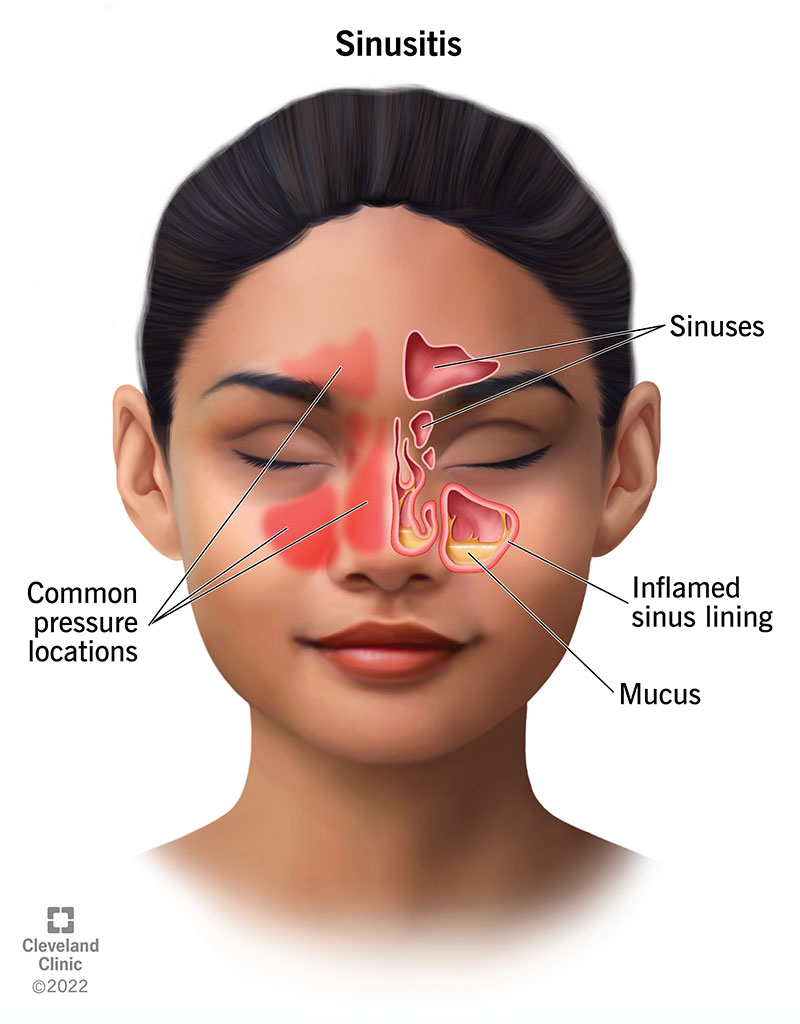
When a cold virus or an allergen such as pollen or dust first enters your body, it irritates the lining of your nose and sinuses (or air-filled pockets around the face) and your nose starts to make a lot of clear mucus. This mucus traps the bacteria, virus or allergens and helps flush them out of your nose and sinuses.

After two or three days, the mucus may change color and become white or yellow. Sometimes the mucus may also turn a greenish color. All of this is normal and does not mean an infection is present.

How does your nose work to protect your body?

Illustration showing inflamed, fluid-filled sinuses. Common pain or pressure points are in your forehead, cheeks and nose.

Your breathing process starts in your nose. Air gets into your lungs through your nose. It helps filter, humidify, warm or cool the air that comes through it so that the air that gets to your lungs is clean.

A special lining of mucosa, or a moist tissue, covers the area inside your nose and consists of many mucus-producing glands. As bacteria, allergens, dust or other harmful particles come into the nose, the mucus traps them. Mucus contains antibodies, or enzymes, which kill unwanted bacteria and viruses.

The mucosa lining also includes cilia, tiny hair-like structures. The cilia are continually in motion and move the collected harmful particles and the mucus that they are trapped in through your nose into the back of your throat. It’s then swallowed and destroyed by the acid in your stomach. Mucus and particles can also be coughed up or sneezed out.

When outdoor temperatures turn cold, the pace of this process slows down. Many times, the mucus stays in your nose and then drips or dribbles out.

Why is mucus an important part of the airway system?

Mucus is needed to keep your airway moist and working properly. Not only does mucus stop harmful particles from getting into your lungs, but it also contains antibodies to help destroy bacteria. If too much mucus is produced, your body wants to get rid of it, leading to coughing and spitting the extra mucus out and blowing it out of your nose.

Possible Causes

Why does a runny nose happen? What causes a runny nose?

Your runny nose may have one or more of several causes. Possible causes include:

  • Allergies.
  • Cold temperatures.
  • Common cold.
  • Flu.
  • Gustatory rhinitis, a form of nonallergic rhinitis that causes a runny nose when you eat certain foods.

What other symptoms may come with a runny nose?

Postnasal drip is a side effect of too much mucus. It occurs when the mucus goes down the back of your throat and is swallowed, which may lead to a cough or sore throat.

Sometimes, a runny nose and a congested, or stuffy, nose are seen together. Congestion occurs when the tissues lining the nose become swollen and make it difficult to breathe. The swelling is due to inflamed blood vessels. Mucus may begin to run out of your nose.

A runny nose due to a cold or flu may be accompanied by fatigue, sore throat, cough, facial pressure and sometimes fever.

A runny nose due to allergies may be accompanied by sneezing and itchy, watery eyes.

Can a runny nose cause a sore throat?

Yes.

Can a runny nose cause an ear infection?

Rhinitis, the inflammation of your nasal tissues, can sometimes have complications including a middle ear infection.

Is a runny nose contagious?

A runny nose itself is not contagious, but it is often a symptom of a condition like the common cold, which can be passed from person to person.

Care and Treatment

How do I stop my runny nose?

Your runny nose will likely stop on its own. Generally, it doesn’t need treatment. But, there are exceptions.

What kind of healthcare provider can treat my runny nose?

If treatment is necessary, your primary healthcare provider can help. If it turns out that your runny nose is a symptom of a more serious condition, your healthcare provider might refer you to an Ear, Nose and Throat specialist.

When should I contact a healthcare provider to treat a runny nose?

A runny nose will typically go away on its own. However, a healthcare provider should be contacted if:

  • The symptoms continue for more than 10 days and there is no improvement.
  • Symptoms are severe or unusual.
  • Drainage from your young child’s nose comes from only one side and is green, bloody or foul-smelling, or if you have other reason to believe there may be a foreign object stuck in their nose.

Your healthcare provider will perform a physical examination to make sure the runny nose is not a symptom of a more serious condition.

How do I get rid of my runny nose? What medicines should I try?

Prescription medicines, such as antibiotics are not needed to treat a runny nose, which usually gets better on its own. Sometimes, an over-the-counter decongestant medicine may help adults, but might not be appropriate if you have certain conditions or take other medications. Check with your healthcare provider to see what over-the-counter medicines are appropriate for you.

Typically, the best treatment for a runny nose includes:

  • Rest.
  • Drink plenty of fluids, especially water.
  • Use a saline nasal spray to help relieve symptoms. Limit the use of decongestant nasal sprays to no longer than a few days, as instructed on package labels.
  • A cool-mist humidifier at your bedside can combat congestion worsened by dry winter air.

Unless recommended by your healthcare provider, don’t give over-the-counter cold medicines to a child under age four.

What treatment is recommended for a runny nose due to an allergy?

  • Stay indoors when the pollen count is high, usually in the early morning and on windy days.

  • Keep windows closed during allergy season, and use air conditioning whenever possible.
  • Wear a dust mask if working outdoors. Change clothing and take a shower right away after coming indoors.
  • Avoid contact with cats and dogs if you are sensitive to animal dander.

Also, there are many safe and effective over-the-counter medications available to help control allergy symptoms, such as nasal steroid sprays and oral antihistamines. If the symptoms are severe, your healthcare provider may recommend prescription medications, or refer you to an allergist for testing and targeted therapy. eResearch by Navid Ajamin -- spring 2023

What are some simple home remedies to treat a runny nose?

Over-the-counter saline (saltwater) drops can be gently squirted into your nostrils to loosen the mucus in your nose. The liquid and mucus can then be suctioned out of your nose with a rubber syringe, or bulb.

Other home remedies you can try include:

  • Essential oils.
  • Drinking hot teas.
  • Facial steam.
  • Hot shower.
  • Neti pot.
  • Spicy foods.

Can a runny nose be prevented?

Practicing good hygiene is important and can often help stop germs from spreading. A runny nose is a symptom of some contagious conditions. Here are some simple tips to stop such germs from spreading:

  • Wash your hands often.
  • Throw away used tissues after blowing or wiping your nose.
  • Keep away from those who have colds or infections.
  • Eat healthily and exercise regularly to help boost your immune system.
  • Cough and sneeze into the inside of your elbow, not into your hand.
  • Clean and disinfect common surfaces such as tables and countertops, toys, door handles and bathroom fixtures. [2]

Reference:

  1. mayoclinic.org/symptoms/runny-nose/basics/causes/sym-20050640
  2. my.clevelandclinic.org/health/symptoms/17660-runny-nose
  3. drfurze.com/blog/5-underlying-causes-of-a-runny-nose-you-may-not-have-considered
  4. zyrtec.com/allergy-guide/outdoors/understanding-spring-allergies
  5. nih.gov/news-events/nih-research-matters/genetic-alteration-child-reveals-immune-response-pathway-common-cold

See also:

Antibiotics, also known as antibacterials, are medications that destroy or slow down the growth of bacteria. They include a range of powerful drugs and are used to treat diseases caused by bacteria. Antibiotics cannot treat viral infections, such as cold, flu, and most coughs.

Antibiotics are specific for the type of bacteria being treated and, in general, cannot be interchanged from one infection to another. When antibiotics are used correctly, they are usually safe with few side effects.

The Real Difference Between Tablets And Capsules

However, as with most drugs, antibiotics can lead to side effects that may range from being a nuisance to serious or life-threatening. In infants and the elderly, in patients with kidney or liver disease, in pregnant or breastfeeding women, and in many other patient groups antibiotic doses may need to be adjusted based upon the specific characteristics of the patient, like kidney or liver function, weight, or age. Drug interactions can also be common with antibiotics. Health care providers are able to assess each patient individually to determine the correct antibiotic and dose.

Antibiotics are not the correct choice for all infections. For example, most sore throats, cough and colds, flu or acute sinusitis are viral in origin (not bacterial) and do not need an antibiotic. These viral infections are “self-limiting”, meaning that your own immune system will usually kick in and fight the virus off. In fact, using antibiotics for viral infections can increase the risk for antibiotic resistance, lower the options for future treatments if an antibiotic is needed, and put a patient at risk for side effects and extra cost due to unnecessary drug treatment.

Antibiotic resistant bacteria cannot be fully inhibited or killed by an antibiotic, even though the antibiotic may have worked effectively before the resistance occurred. Don't share your antibiotic or take medicine that was prescribed for someone else, and don't save an antibiotic to use the next time you get sick. eResearch by Navid Ajamin -- autumn 2020

Top 10 List of Antibiotic Classes (Types of Antibiotics)

  1. Penicillins
  2. Tetracyclines
  3. Cephalosporins
  4. Quinolones
  5. Lincomycins
  6. Macrolides
  7. Sulfonamides
  8. Glycopeptides
  9. Aminoglycosides
  10. Carbapenems

Top 10 List of Generic Antibiotics

  1. amoxicillin: different types of infection caused by bacteria, such as tonsillitis, bronchitis, pneumonia, and infections of the ear, nose, throat, skin, or urinary tract
  2. doxycycline: many different bacterial infections, such as acne, urinary tract infections, intestinal infections, respiratory infections, eye infections, gonorrhea, chlamydia, syphilis, periodontitis (gum disease), and others
  3. cephalexin: pneumonia and other respiratory tract infections; and infections of the bone, skin, ears, , genital, and urinary tract
  4. ciprofloxacin: joint infections, intra abdominal infections, certain type of infectious diarrhea, respiratory tract infections, skin infections, typhoid fever, and urinary tract infections, among others
  5. clindamycin: bone or joint infections, pelvic inflammatory disease, strep throat, pneumonia, middle ear infections, and endocarditis.
  6. metronidazole: many infections caused by bacteria or parasites
  7. azithromycin: respiratory infections, skin infections, ear infections, eye infections, and sexually transmitted diseases
  8. sulfamethoxazole and trimethoprim: middle ear, urine, respiratory, and intestinal infections
  9. amoxicillin and clavulanate: ears, lungs, sinus, skin, and urinary tract
  10. levofloxacin: pneumonia،sinus infection،worsening of chronic bronchitis،skin infections،chronic prostate infection،urinary tract infections،pyelonephritis (kidney infection)،inhalational anthrax،plague
Probiotics and antibiotics create a killer combination | MIT News |  Massachusetts Institute of Technology
Probiotics and antibiotics create a killer combination

Top 10 List of Common Infections Treated with Antibiotics

  • Acne
  • Bronchitis
  • Traveler’s diarrhea
  • Conjunctivitis (Pink Eye)
  • Otitis Media (Ear Infection)
  • Skin or Soft Tissue Infection
  • Urinary Tract Infection (UTI)
  • Upper Respiratory Tract Infection
  • Sexually Transmitted Diseases (STD’s)
  • Streptococcal Pharyngitis (Strep Throat)

Here are a few steps every individual must follow to reduce the impact of antibiotic resistance and limit the spread of resistance.

  • Do not share antibiotics.
  • Do not ask for antibiotics at your doctor’s clinic.
  • Do not discontinue antibiotics without the doctor’s recommendation.
  • Do not take antibiotics for viral infections.
  • Do not save antibiotics for future use.
  • Do not skip doses of antibiotics.
  • Do not stop taking antibiotics when you feel better.
  • Do not take antibiotics with fruit juices, tea, coffee or any other drinks.
  • Do not take antibiotics with birth control pills.

Tips to follow when on antibiotics

If you are taking antibiotics (as prescribed by your doctor), here is what you should do.

-Include probiotics (or curd) in meals.

-Take antibiotics only when prescribed.

-Discard any leftover medicine.

-Eat light, easy-to-digest and non-spicy/oily/salty food.

-Stay hydrated by drinking lots of fluids.

-Complete the course of antibiotics prescribed.

-Inform your doctor if you are taking any other medicines.

-Discuss about the side-effects of antibiotics and ways to deal it, with your doctor.

Avoid Giving Antibiotics To Kids, It Is Harmful To Them: Study

Using antibiotics for viral infections can increase the risk for antibiotic resistance. Antibiotic-resistant bacteria cannot be fully inhibited or killed by an antibiotic, even though the antibiotic may have worked effectively before the resistance occurred. This can also lower your options for effective treatments if an antibiotic is needed eventually due to a secondary infection. Using unnecessary antibiotics also puts you at risk for side effects and adds extra cost.

It's important not to share your antibiotic or take medicine that was prescribed for someone else, and don't save an antibiotic to use the next time you get sick. It may not be the right drug for your illness.

Sources:

National Institute of Allergy and Infectious Diseases. Antimicrobial (Drug) Resistance. Accessed Sept. 17, 2021 at https://www.niaid.nih.gov/research/antimicrobial-resistance

MedLine Plus. Antibiotics. Accessed Sept. 17, 2021 at https://medlineplus.gov/antibiotics.html#summar

Reference:

  • drugs.com/article/antibiotics.html
  • 1mg.com/articles/know-your-medicines-antibiotics

See also:

Your body’s like a little furnace. It puts out heat all the time. It comes from your body doing the work that keeps you alive. When it puts out a lot more or a lot less heat than usual, it’s trying to tell you there’s a problem.

What to do if your child has a temperature or a fever | NCT
body temperature = 37 degrees Celsius

Normal body temperature varies by person, age, activity, and time of day.

The average normal body temperature is generally accepted as 98.6°F (37°C).

Some studies have shown that the "normal" body temperature can have a wide range, from 97°F (36.1°C) to 99°F (37.2°C).

A temperature over 100.4°F (38°C) most often means you have a fever caused by an infection or illness.

Body temperature normally changes throughout the day.

  • درجه ی حرارت بدن می تواند بین ۳۶٫۴ تا ۳۷٫۶ درجه ی سانتیگراد باشد. این درجه در طول روز نوسان دارد و ثابت نمی ماند.
  • دمای بدن در ابتدای صبح در پایین ترین میزان خود قرار دارد و معمولا در اواخر بعد از ظهر به بالاترین درجه ی خود یعنی ۳۷٫۷ درجه ی سانتیگراد می رسد.
  • درجه حرارت بدن نشان دهنده شدت بیماری نیست، یعنی اگر دمای بدن به 40درجه برسد به این معنی نیست که بیماری فرد شدیدتر از کسی است که تب 38درجه دارد.

آیا هرچه درجه حرارت بدن بالاتر باشد، بیماری وخیم‌تر است؟
درجه حرارت بدن نشان دهنده شدت و وخامت بیماری نیست، یعنی اگر دمای بدن به 40درجه برسد به این معنی نیست که بیماری فرد شدیدتر از کسی است که تب 38درجه دارد.
خوشبختانه تب به محض اینکه بدن بر بیماری غلبه کند از بین می‌رود.
بهترین روش برای اندازه‌گیری درجه حرارت بدن از طریق مقعد و آن هم یک بار در روز است.
مهم‌تر از همه اینکه باید حواستان به علائم دیگری مانند خواب‌آلودگی و سنگینی سینه فرد تب کرده باشد. چون تمام این علائم نشان دهنده مشکلات جدی در داخل بدن هستند.
آیا شرایط بدنی همه در برابر تب یکسان است؟

تب در همه افراد یکسان نیست. برخی افراد به راحتی و با سرعت تمام تب می‌کنند و درجه حرارت بدن آنها به 40درجه می رسد.
در حالی که در برخی دیگر زمان زیادی طول می‌کشد تا دمای بدن به این درجه برسد.
در برخی موارد نیز فرد به هیچ عنوان تب نمی‌کند. بنابراین بدن افراد مختلف نسبت به افزایش درجه حرارت واکنش متفاوتی نشان می دهد.
آیا درجه حرارت بدن خیلی بالا خطرناک است؟
اگر تب کنترل شود، خطرساز نخواهد بود. در بیشتر موارد نیازی به تلاش برای کاهش درجه حرارت بدن نیست.
چنانچه احساس درد می‌کنید یا واقعاً مریض هستید، می‌توانید از استامینوفن استفاده کنید. این مراقبت ها باعث کاهش تب می شود.
اما تب ناشی از گرمازدگی قطع نمی‌شود و اگر با کم‌آبی بدن همراه باشد، خطرآفرین خواهد بود. در نتیجه بهتر است با مشاهده علائم تب به پزشک مراجعه کنید.
توجه داشته باشید که تب در نوزادان و کودکان باید جدی گرفته شود و فوراً به پزشک متخصص اطفال مراجعه شود.
توجه داشته باشید که برای کودکان صرفاً باید از شربت استامینوفن یا بروفن استفاده شود و هرگز از آسپیرین استفاده نکرد
آیا درجه حرات پایین بدن خطرناک است؟
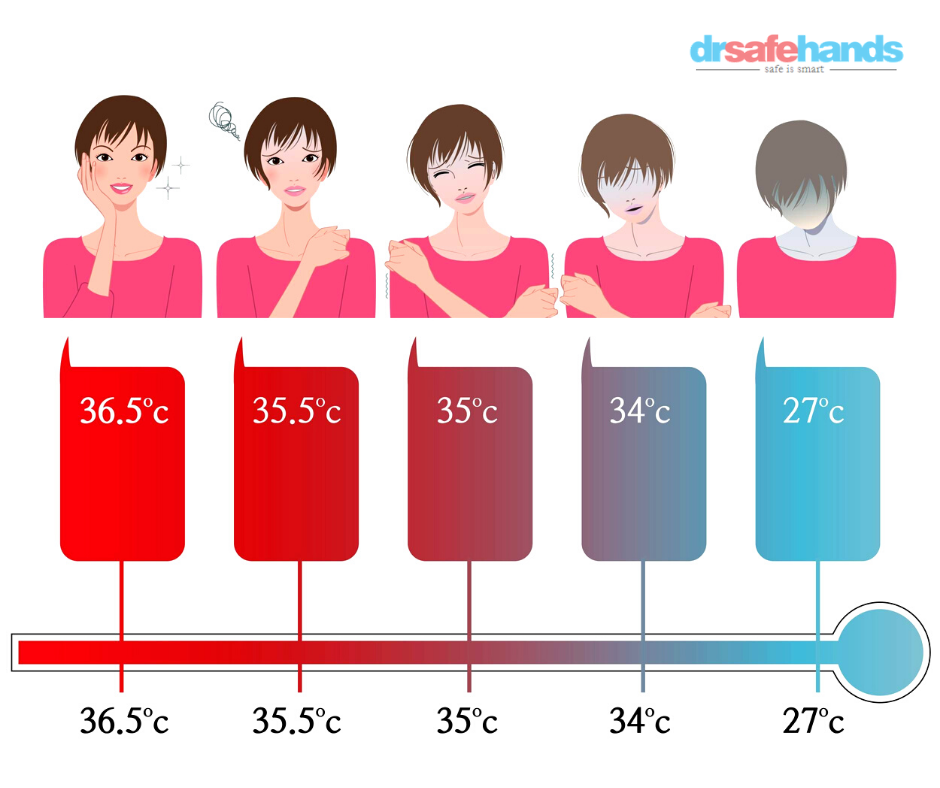
افت غیرعادی درجه حرارت بدن می تواند خطرناک و حتی مرگبار باشد.
کاهش درجه حرارت بدن می‌تواند در اثر قرار گرفتن طولانی مدت در سرما، شوک، مصرف الکل یا مواد مخدر و همچنین بیماری های متابولیکی مانند دیابت باشد.
افت دمای بدن زمانی رخ می‌دهد که دمای مرکزی بدن به شدت افت کند و ارگان‌های حیاتی بدن تحت تأثیر قرار بگیرد.
کاهش درجه حرارت بدن همچنین می‌تواند نشان دهنده وجود عفونت در نوزادان، سالمندان و افراد ضعیف باشد.
توجه داشته باشید که عفونت خون نیز می تواند منجر به کاهش دمای بدن شود.

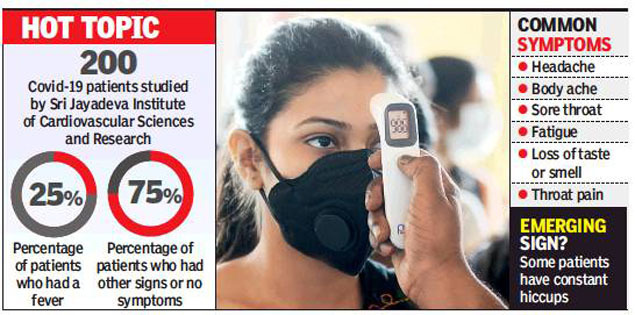
Body temperature not a reliable Covid indicator: Study | Bengaluru News -  Times of India

تب‌برهای رایج
در صورت بروز تب، استفاده از تب‌برهای معمول روش مناسبی برای کاهش درجه حرارت بدن محسوب می شود.
معمولاً استامینوفن و داروهای ضدالتهاب غیراستروئیدی مانند آسپیرین و بروفن برای این کار استفاده می شود.
توجه داشته باشید که برای کودکان صرفاً باید از شربت استامینوفن یا بروفن استفاده شود و هرگز از آسپیرین استفاده نکرد.
بهتر است با مشاهده علائم تب بخصوص در کودکان به پزشک مراجعه کنید.

Normal Range

Not everyone’s “normal” body temperature is the same. Yours could be a whole degree different than someone else’s. A German doctor in the 19th century set the standard at 98.6 F, but more recent studies say the baseline for most people is closer to 98.2 F.

For a typical adult, body temperature can be anywhere from 97 F to 99 F. Babies and children have a little higher range: 97.9 F to 100.4 F.

Your temperature doesn’t stay same all day, and it will vary throughout your lifetime, too. Some things that cause your temperature to move around during the day include:

  • How active you are
  • What time of day it is
  • Your age
  • Your sex
  • What you’ve eaten or had to drink
  • Where you are in your menstrual cycle

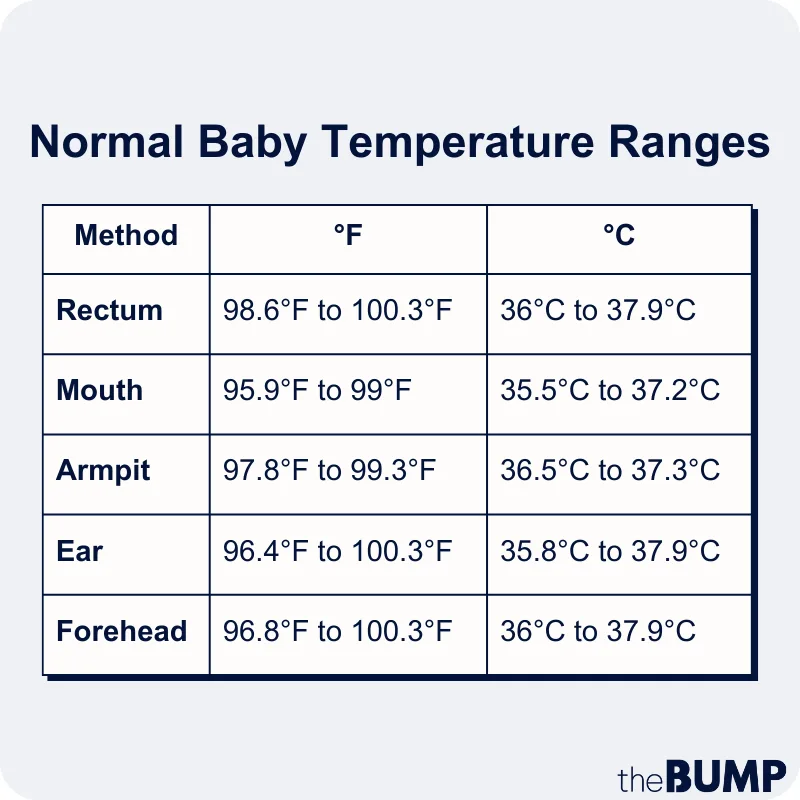
Your temperature reading changes based on where on your body you measure it. Underarm readings can be a degree lower than what you’d find from your mouth. Rectal temperatures usually are up to a degree higher than mouth readings.

A body temperature higher than your normal range is a fever. It’s hypothermia when the body temperature dips too low. Both need to be watched.

Fever

Fevers during pregnancy are never normal, so an exam is always recommended. Luckily, if the fever was caused by a viral illness, hydration and Tylenol are usually enough for recovery. But if the cause is bacterial, an antibiotic is often needed. Pregnant women should not take aspirin or ibuprofen...

What symptoms usually accompany a fever?

Expecting mothers should pay attention to and tell their doctors about symptoms accompanying a fever. These include:

  • shortness of breath
  • back pain
  • chills
  • abdominal pain
  • neck stiffness

How high is too high when it comes to your temperature? Anything above 100.4 F is considered a fever. You may feel terrible, but on the whole, a fever isn’t bad for you. It’s a sign your body is doing what it should when germs invade. It’s fighting them off.

However, if your temperature is 103 F or higher or if you’ve had a fever for more than 3 days, call your doctor. Also call if you have a fever with symptoms like severe throat swelling, vomiting, headache, chest pain, stiff neck or rash.

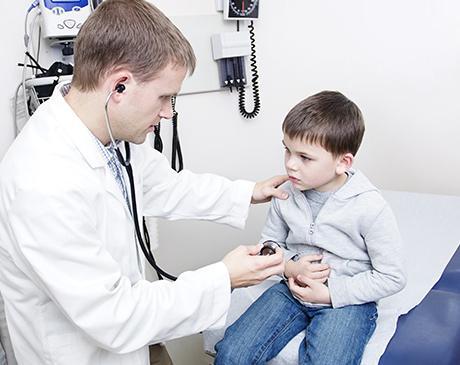
For children, fevers are a bit more complicated. Call your pediatrician if your child is:

  • Under 3 months and has a rectal temperatures of 100.4 F or higher
  • Between 3 months and 3 years and has a rectal temperature over 102 F
  • Older than 3 years and has an oral temperatures above 103 F
  • Between 3 and 6 months and -- along with a fever -- is fussier or more uncomfortable than usual, or doesn’t seem alert
  • Sick enough for you to be concerned, regardless of what the thermometer says

Hypothermia

If your body loses too much heat, it can be very serious, even fatal. Hypothermia is when your body temperature goes below 95 F. You might think of hypothermia as something that only happens when you’re exposed to extremely cold weather for a long time. But it happens indoors, too.

Hypothermia is a special concern for newborns and the elderly.

Babies may not be good at regulating their temperature. They can lose heat quickly. It’s important to keep them warm. A temperature below 97 F is considered too low for babies.

Older adults can also struggle to keep their body temperature in a normal range if they’re somewhere with intense air conditioning or there’s not enough heat.

For both the elderly and young children, a below-normal body temperature can be a sign they’re sick.

Other things can also make you more likely to get hypothermia. They include:

  • Alcohol or drug use
  • Hypothyroidism (an underactive thyroid)
  • Anorexia
  • Stroke
  • Sepsis (overwhelming infection)
  • Parkinson’s disease
  • Nerve damage
  • Malnutrition
  • Medicines such as antidepressants, antipsychotics, or sedatives
  • Anesthesia

Here are some of the factors that affect body temperature:

  • Our bodies tend to warm up throughout the day.
  • Older adults have lower body temperatures since our ability to regulate body temperature lessens as we age.
  • Younger people have higher body temperatures.
  • The level of physical activity affects temperature because the more you move your body, the warmer your core body becomes.
  • Hotter and colder weather can also mirror your body temperature — it rises when in a warm environment and lowers in the cold.
  • Temperature readings from the armpit are lower than the thermometer read from the mouth.
  • Thermometer readings from the mouth are lower than if taken in the ear or rectum.
  • Hormone levels can affect body temperature.
  • Excess weight can also be associatedTrusted Source with lower body temperatures.

MEDICINES TO REDUCE FEVER

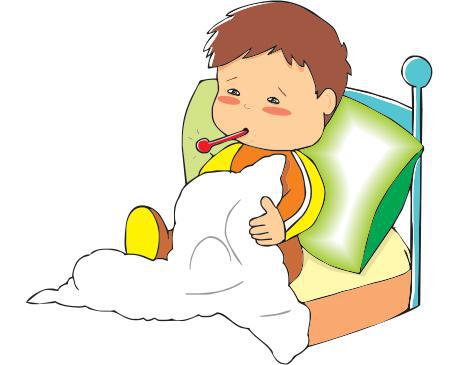
Drawing of child in bed with fever
between 36.5°C and 37.5°C

Remember that fever is helping your child fight the infection. Fevers only need to be treated with medicine if they cause discomfort. That usually means fevers above 102°F (39°C).

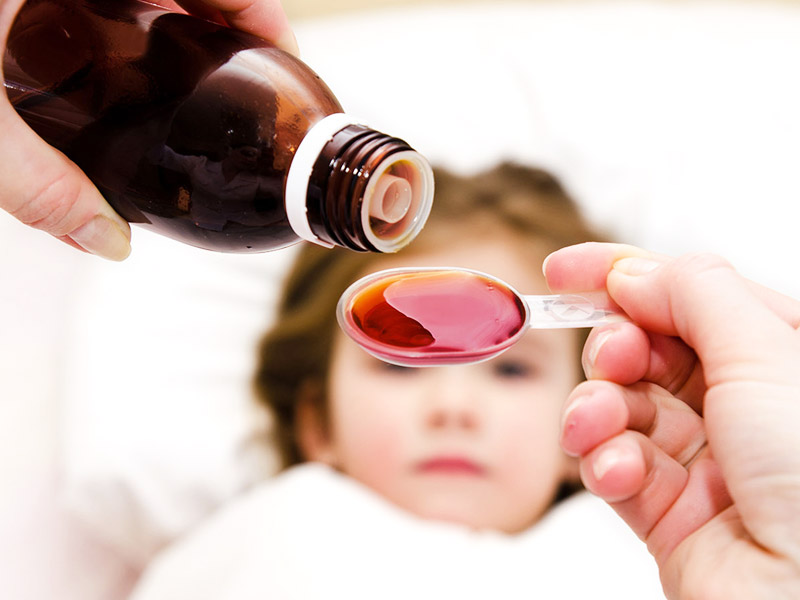
These medicines start working in about 30 minutes, and 2 hours after they are given, these drugs will reduce the fever 2°F to 3°F (1°C to 1.5°C). Medicines do not bring the temperature down to normal unless the temperature was not very high before the medicine was given. Repeated dosages of the drugs will be necessary because the fever will go up and down until the illness runs its course. If your child is sleeping, don't awaken him for medicines.

Acetaminophen: Children older than 3 months of age can be given acetaminophen (Tylenol). Give the correct dosage for your child's weight every 4 to 6 hours. Never give more than 5 doses in any 24 hours.

Ibuprofen: Ibuprofen (Advil, Motrin) is approved for infants over 6 months of age. One advantage ibuprofen has over acetaminophen is a longer lasting effect (6 to 8 hours instead of 4 to 6 hours). Give the correct dosage for your child's weight every 6 to 8 hours.

Caution: The dropper that comes with one product should not be used with other brands.

Caution: Do not use acetaminophen and ibuprofen together unless recommended by your child’s healthcare provider. Mainly, it’s unnecessary and can be confusing.

Avoid aspirin: Doctors recommend that children (through age 21 years) not take aspirin for fevers. Aspirin taken during a viral infection, such as chickenpox or flu, has been linked to a severe illness called Reye's syndrome. If you have teens, warn them to avoid aspirin.

Reference:

  • lakeareapediatrics.com/patient-information/fever-instruction-and-medication-dosing-charts.html
  • healthline.com/health/what-is-normal-body-temperature#whats-considered-a-fever
  • healthline.com/health/pregnancy/could-fever-harm-my-baby
  • webmd.com/first-aid/normal-body-temperature#2
  • medlineplus.gov/ency/article/001982.htm
  • med-hot.com

انواع مختلف گلو درد معمولا در اثر عفونت یا عوامل محیطی مانند خشکی هوا ایجاد می شود . اگرچه تحمل گلو درد می تواند یک فرآیند ناخوشایند باشد، اما معمولا به مرور زمان از بین می رود.

بر اساس محل عفونت می توان گلو درد را به سه نوع تقسیم کرد:

  • فارنژیت در ناحیه درست پشت دهان به وجود می آید. فارنژیت یا گلودرد التهابی (Pharyngitis)
  • تونسیلیت با ورم و قرمز شدن لوزه ها همراه است. تونسیلیت یا التهاب لوزه‌ها (Tonsillitis)
  • لارنژیت با ورم و قرمز شدن حنجره همراه است. لارنژیت یا التهاب حنجره (Laryngitis)

علائم گلو درد بسته به نوع بیماری می تواند متفاوت باشد: خارش،سوزش،خشکی،خلط گلو،درد جزیی

در بیشتر موارد، غذا خوردن و حرف زدن می تواند باعث افزایش درد شود. در این حالت گلو و لوزه قرمز و ورم کرده به نظر می رسد.

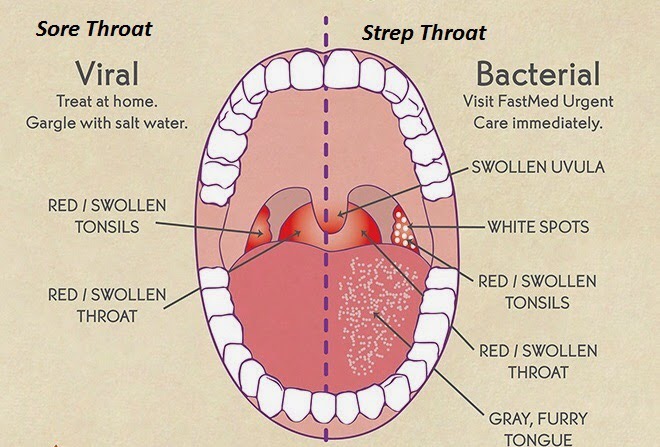
گلو درد گاها با لکه های سفید یا چرک روی لوزه ها همراه است. این لکه های سفید معمولا در گلو دردهای میکروبی شایع است.

گلو درد می تواند با علائم دیگر هم همراه باشد:

گرفتگی بینی،آبریزش بینی،عطسه،سرفه،تب،لرز،غدد متورم در گردن،عوض شدن صدا،درد بدن،سردرد،مشکل در بلعیدن،از دست دادن اشتها

ویروس ها عامل 90 درصد موارد گلو درد هستند.

Comparison of a eukaryotic cell and a prokaryotic cell.  The germ that causes strep throat is a bacteria with a prokaryotic cellStreptococcus pyrogenes (strep) viewed under the microscope. (900x magnification, source)

از جمله ویروس هایی که باعث گلو درد می شوند عبارتند از:

  • سرماخوردگی
  • انواع آنفولانزا
  • (Coronavirus disease 2019 (COVID-19
  • مونونوکلئوز، یک بیماری عفونی که از طریق بزاق منتقل می شود
  • سرخک، بیماری که باعث ایجاد بثورات و تب می شود
  • آبله مرغان، عفونی که باعث تب و خارش پوست می شود
  • اوریون، عفونی که باعث تورم غدد بزاقی در گردن می شود

عفونت های باکتریایی نیز می توانند باعث گلو درد شوند. شایع ترین آن گلو درد استرپتوکوکی است (عفونت لوزه و گلو ناشی از باکتری های گروه A استرپتوکوک).

این باکتری عامل تقریباً 40 درصد از موارد گلو درد در کودکان است. تونسیلیت و عفونت های مقاربتی مانند سوزاک و کلامیدیا نیز می توانند باعث گلو درد شوند.

هنگامی که سیستم ایمنی بدن نسبت به عوامل حساسیت زا مانند گرده گل، پوشش گیاهی و موی حیوانات خانگی واکنش نشان می دهد، مواد شیمیایی را آزاد می کند که باعث ایجاد علائمی مانند احتقان بینی، آبریزش چشم، عطسه و سوزش گلو می شود.

مخاط بیش از حد در بینی می تواند به بخش پایین گلو وارد شود. به این پدیده اختلال آبریزش از پشت بینی گفته شده و می تواند گلو را تحریک کند.

هوای خشک باعث کاهش رطوبت در دهان و گلو شده و حس خشکی و خارش را به وجود می آورد. این نوع اختلال در ماه های سرد و با روشن بودن بخاری تشدید می شود.

بسیاری از مواد شیمیایی مختلف و موجود در محیط اطراف، گلو را تحریک می کنند.

برخی از این مواد عبارتند از:

  • محصولات بهداشتی و سایر مواد شیمیایی
  • سیگار و سایر دودهای دخانیات
  • آلودگی هوا
  • ...

داروهای خانگی برای گلو درد eResearch by Navid Ajamin -- autumn 2020

11 Home Remedies To Treat Strep Throat In Children

بیشتر گلو دردها با درمان خانگی بهبود پیدا می کنند. تنها باید برای مدتی استراحت کافی داشته باشید تا به سیستم ایمنی بدنتان فرصتی برای مقابله با عفونت بدهید.

برای تسکین درد گلو می توانید:

  • مخلوط آب گرم و نیم تا 1 قاشق چای خوری نمک را غرغره کنید.
  • برای کاهش درد، مایعات گرم مانند چای داغ یا با عسل، سوپ یا آب گرم با لیمو بنوشید. چای های گیاهی هم تسکین دهنده های بسیار خوبی برای درد گلو هستند.
  • از دستگاه بخور برای افزایش رطوبت هوا استفاده کنید.
  • برای کاهش درد کمتر صحبت کنید.

A sore throat is pain, scratchiness or irritation of the throat that often worsens when you swallow. The most common cause of a sore throat (pharyngitis) is a viral infection, such as a cold or the flu. A sore throat caused by a virus resolves on its own.

Strep throat (streptococcal infection), a less common type of sore throat caused by bacteria, requires treatment with antibiotics to prevent complications. Other less common causes of sore throat might require more complex treatment.

However, it’s especially common in children between the ages of 5 and 15.

Sneezing and coughing can spread the infection from one person to another.

Is it COVID-19, the flu or a cold? Des Moines, Iowa (IA), MercyOne

Symptoms of a sore throat can vary depending on the cause. Signs and symptoms might include:

  • Pain or a scratchy sensation in the throat
  • Pain that worsens with swallowing or talking
  • Difficulty swallowing
  • Sore, swollen glands in your neck or jaw
  • Swollen, red tonsils
  • White patches or pus on your tonsils
  • A hoarse or muffled voice

The Difference Between Strep Throat and Tonsillitis

Infections causing a sore throat might result in other signs and symptoms, including:

  • Fever
  • Cough
  • Runny nose
  • Sneezing
  • Body aches
  • Headache
  • Nausea or vomiting

When to see a doctor

Take your child to a doctor if your child's sore throat doesn't go away with the first drink in the morning, recommends the American Academy of Pediatrics.

Get immediate care if your child has severe signs and symptoms such as:

  • Difficulty breathing
  • Difficulty swallowing
  • Unusual drooling, which might indicate an inability to swallow

If you're an adult, see your doctor if you have a sore throat and any of the following associated problems, according to the American Academy of Otolaryngology — Head and Neck Surgery:

  • A sore throat that is severe or lasts longer than a week
  • Difficulty swallowing
  • Difficulty breathing
  • Difficulty opening your mouth
  • Joint pain
  • Earache
  • Rash
  • Fever higher than 101 F (38.3 C)
  • Blood in your saliva or phlegm
  • Frequently recurring sore throats
  • A lump in your neck
  • Hoarseness lasting more than two weeks
  • Swelling in your neck or face

Causes

14 Fast Tips to Cure a Sore Throat | Cookist.com

Viruses that cause the common cold and the flu also cause most sore throats. Less often, bacterial infections cause sore throats.

Viral infections

Viral illnesses that cause a sore throat include:

  • Common cold
  • Flu (influenza)
  • Mono (mononucleosis)
  • Measles
  • Chickenpox
  • Coronavirus disease 2019 (COVID-19)
  • Croup — a common childhood illness characterized by a harsh, barking cough

Sore Throat - is it Strep or Something Else? — Family Wellness Tips

Prevention

The best way to prevent sore throats is to avoid the germs that cause them and practice good hygiene. Follow these tips and teach your child to do the same:

  • Wash your hands thoroughly and frequently, especially after using the toilet, before eating, and after sneezing or coughing.
  • Avoid sharing food, drinking glasses or utensils.
  • Cough or sneeze into a tissue and throw it away. When necessary, sneeze into your elbow.
  • Use alcohol-based hand sanitizers as an alternative to washing hands when soap and water aren't available.
  • Avoid touching public phones or drinking fountains with your mouth.
  • Regularly clean telephones, TV remotes and computer keyboards with sanitizing cleanser. When you travel, clean phones and remotes in your hotel room.
  • Avoid close contact with people who are sick.

Reference:

  • mayoclinic.org/diseases-conditions/sore-throat/symptoms-causes/syc-20351635
  • kristinmoonscience.com/why-you-shouldnt-ignore-strep-throat
  • healthline.com/health/strep-throat
  • darmankade.com/blog/sore-throat

Why is this medication prescribed?

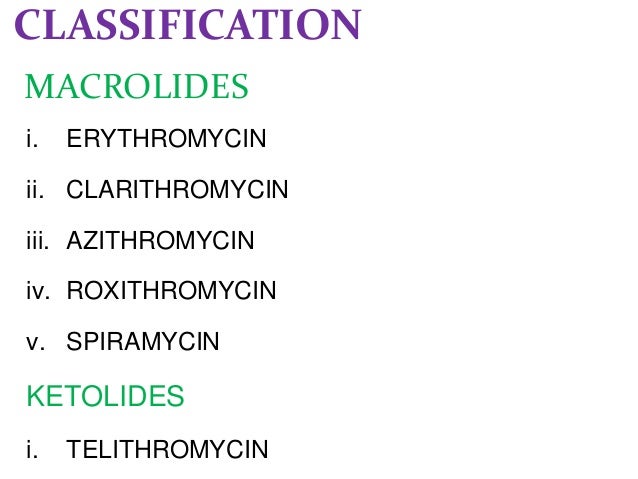
Azithromycin is used to treat certain bacterial infections, such as bronchitis; pneumonia; sexually transmitted diseases (STD); and infections of the ears, lungs, sinuses, skin, throat, and reproductive organs. Azithromycin also is used to treat or prevent disseminated Mycobacterium avium complex (MAC) infection [a type of lung infection that often affects people with human immunodeficiency virus (HIV)]. Azithromycin is in a class of medications called macrolide antibiotics. It works by stopping the growth of bacteria.

Antibiotics such as azithromycin will not work for colds, flu, or other viral infections. Using antibiotics when they are not needed increases your risk of getting an infection later that resists antibiotic treatment.

Other uses for this medicine

Azithromycin is also used sometimes to treat H. pylori infection, travelers' diarrhea, and other gastrointestinal infections; Legionnaires' disease (a type of lung infection); pertussis (whooping cough; a serious infection that can cause severe coughing); Lyme disease (an infection that may develop after a person is bitten by a tick); and babesiosis (an infectious disease carried by ticks). It is also used to prevent heart infection in people having dental or other procedures, and to prevent STD in victims of sexual assault. Talk to your doctor about the possible risks of using this medication for your condition.

This medication may be prescribed for other uses; ask your doctor or pharmacist for more information.

Before taking this medicine

Azithromycin: Uses, dosage, side effects, and warnings
Azithromycin or Zithromax is an antibiotic

You should not use azithromycin if you are allergic to it, or if:

  • you have ever had jaundice or liver problems caused by taking azithromycin; or

  • you are allergic to similar drugs such as clarithromycin, erythromycin, or telithromycin.

To make sure azithromycin is safe for you, tell your doctor if you have ever had:

  • liver disease;

  • kidney disease;

  • myasthenia gravis;

  • a heart rhythm disorder;

  • low levels of potassium in your blood; or

  • long QT syndrome (in you or a family member).

This medicine is not expected to harm an unborn baby. Tell your doctor if you are pregnant or plan to become pregnant.

Azithromycin: Mechanisms of action and their relevance for ...

It is not known whether azithromycin passes into breast milk or if it could harm a nursing baby. Tell your doctor if you are breast-feeding a baby.

Azithromycin is used to treat a wide variety of bacterial infections. It is a macrolide-type antibiotic. It works by stopping the growth of bacteria. This medication will not work for viral infections (such as common cold, flu).

Macrolide Antibiotics - an overview | ScienceDirect Topics

Azithromycin is a macrolide antibiotic which inhibits bacterial protein synthesis, quorum-sensing and reduces the formation of biofilm. Accumulating effectively in cells, particularly phagocytes, it is delivered in high concentrations to sites of infection, as reflected in rapid plasma clearance and extensive tissue distribution. Azithromycin is indicated for respiratory, urogenital, dermal and other bacterial infections, and exerts immunomodulatory effects in chronic inflammatory disorders, including diffuse panbronchiolitis, post-transplant bronchiolitis and rosacea. Modulation of host responses facilitates its long-term therapeutic benefit in cystic fibrosis, non-cystic fibrosis bronchiectasis, exacerbations of chronic obstructive pulmonary disease (COPD) and non-eosinophilic asthma.

Macrolide antibiotics

Initial, stimulatory effects of azithromycin on immune and epithelial cells, involving interactions with phospholipids and Erk1/2, are followed by later modulation of transcription factors AP-1, NFκB, inflammatory cytokine and mucin release. Delayed inhibitory effects on cell function and high lysosomal accumulation accompany disruption of protein and intracellular lipid transport, regulation of surface receptor expression, of macrophage phenotype and autophagy. These later changes underlie many immunomodulatory effects of azithromycin, contributing to resolution of acute infections and reduction of exacerbations in chronic airway diseases. A sub-group of post-transplant bronchiolitis patients appears to be sensitive to azithromycin, as may be patients with severe sepsis. Other promising indications include chronic prostatitis and periodontitis, but weak activity in malaria is unlikely to prove crucial. Long-term administration of azithromycin must be balanced against the potential for increased bacterial resistance. Azithromycin has a very good record of safety, but recent reports indicate rare cases of cardiac torsades des pointes in patients at risk.

آنچه دانشمندان می‌خواهند درباره کرونا بدانند (۱)| چه درمان‌هایی ...

Reference:

  • drugs.com/azithromycin.html
  • webmd.com/drugs/2/drug-1527-3223/azithromycin-oral/azithromycin-250-500-mg-oral/details
  • sciencedirect.com/science/article/abs/pii/S0163725814000552
  • medlineplus.gov/druginfo/meds/a697037.html

See also:

A cough is a reflex action to clear your airways of mucus and irritants such as dust or smoke. It's rarely a sign of anything serious. Most coughs clear up within 3 weeks and don't require any treatment.

A chronic cough can occur with other signs and symptoms, which may include:

  • A runny or stuffy nose
  • A feeling of liquid running down the back of your throat (postnasal drip)
  • Frequent throat clearing and sore throat
  • Hoarseness
  • Wheezing and shortness of breath
  • Heartburn or a sour taste in your mouth
  • In rare cases, coughing up blood

Dry Cough: Causes and Proven Treatment (Breathing Exercises ...

Causes

An occasional cough is normal — it helps clear irritants and secretions from your lungs and prevents infection.

However, a cough that persists for weeks is usually the result of a medical problem. In many cases, more than one cause is involved.

The following causes, alone or in combination, are responsible for the majority of cases of chronic cough:

  • Postnasal drip. When your nose or sinuses produce extra mucus, it can drip down the back of your throat and trigger your cough reflex. This condition is also called upper airway cough syndrome (UACS).
  • Asthma. An asthma-related cough may come and go with the seasons, appear after an upper respiratory tract infection, or become worse when you're exposed to cold air or certain chemicals or fragrances. In one type of asthma (cough-variant asthma), a cough is the main symptom.
  • Gastroesophageal reflux disease (GERD). In this common condition, stomach acid flows back into the tube that connects your stomach and throat (esophagus). The constant irritation can lead to chronic coughing. The coughing, in turn, worsens GERD — a vicious cycle.
  • Infections. A cough can linger long after other symptoms of pneumonia, flu, a cold or other infection of the upper respiratory tract have gone away. A common but under-recognized cause of a chronic cough in adults is pertussis, also known as whooping cough. Chronic cough can also occur with fungal infections of the lung, tuberculosis (TB) infection or lung infection with nontuberculous mycobacterial organisms.
  • Chronic obstructive pulmonary disease (COPD). COPD, a chronic inflammatory lung disease that causes obstructed airflow from the lungs, includes chronic bronchitis and emphysema. Chronic bronchitis can cause a cough that brings up colored sputum. Emphysema causes shortness of breath and damages the air sacs in the lungs (alveoli). Most people with COPD are current or former smokers.
  • Blood pressure drugs. Angiotensin-converting enzyme (ACE) inhibitors, which are commonly prescribed for high blood pressure and heart failure, are known to cause chronic cough in some people.

Less commonly, chronic cough may be caused by:

  • Aspiration (food in adults; foreign bodies in children)
  • Bronchiectasis (damaged, dilated airways)
  • Bronchiolitis (inflammation of the very small airways of the lung)
  • Cystic fibrosis
  • Laryngopharyngeal reflux (stomach acid flows up into the throat)
  • Lung cancer
  • Nonasthmatic eosinophilic bronchitis (airway inflammation not caused by asthma)
  • Sarcoidosis (collections of inflammatory cells in different parts of your body, most commonly the lungs)
  • Idiopathic pulmonary fibrosis (chronic scarring of the lungs due to an unknown cause)

Complications

Having a persistent cough can be exhausting. Coughing can cause a variety of problems, including:

  • Sleep disruption
  • Headache
  • Dizziness
  • Vomiting
  • Excessive sweating
  • Loss of bladder control (urinary incontinence)
  • Fractured ribs
  • Passing out (syncope)

Reference:

  • mayoclinic.org/diseases-conditions/chronic-cough/symptoms-causes/syc-20351575
  • nhsinform.scot/illnesses-and-conditions/lungs-and-airways/cough

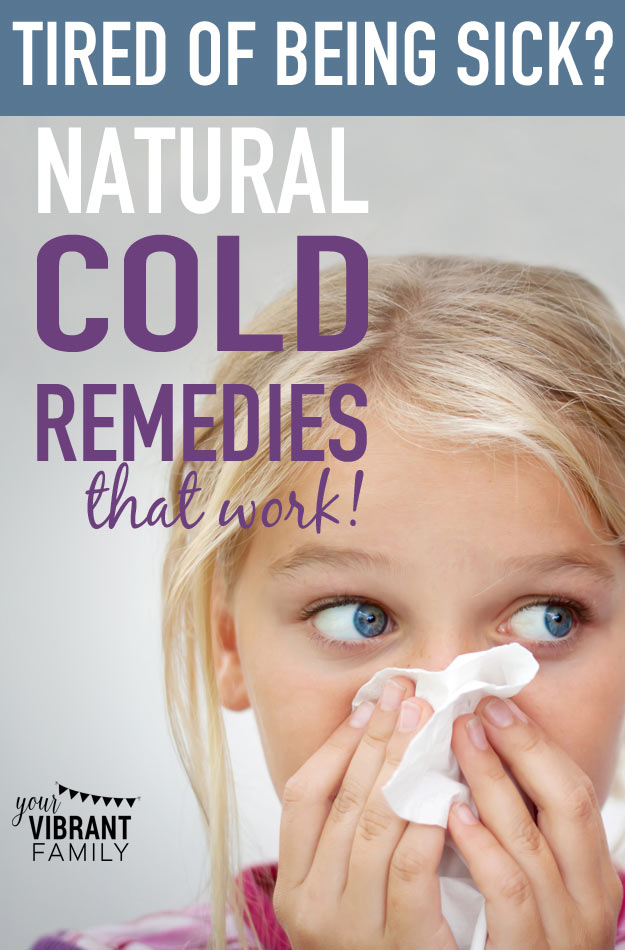
You’ll notice that the common cold makes a comeback as the weather begins to cool down in autumn. As do complementary medicines for many people to prevent and treat common cold symptoms such as a runny nose, sore throat and headache. But complementary medicines for colds have mixed results, what does the research have to say on their effectiveness?

Vitamin C

Vitamin C has been in popular use for the common cold for at least 40 years. During this time many studies have been done. However there are mixed results.

An analysis of the research has found that 200 mg or more a day of vitamin C doesn’t reduce the chances of you catching a cold. But it may shorten how long a cold lasts by up to 1 ½ days and decrease how severe it feels.

Zinc

The research is also mixed for zinc, a mineral used for prevention and treatment. On the one hand, if taken within 24 hours of cold symptoms appearing, zinc decreases how long it lasts and the severity of symptoms. And if taken continuously for a minimum of five months, it can reduce the chances of catching a cold.

But there are notable side effects. Zinc lozenges can cause a bad taste in your mouth and nausea, and nasals sprays may reduce your ability to smell, possibly for good.

Echinacea

While some studies find that echinacea, a herbal remedy, shortens how long a cold lasts and severity of symptoms, other studies don’t. As a result, at this stage the best that can be said about echinacea is that more research needs to be done.

Why supplements might help prevent or treat COVID-19

While science can show whether a drug is effective, we may not always know why. When antibiotics were first discovered in the 1920s, there was limited understanding of the biology involved. But lacking an explanation for their benefit did not discourage doctors from recommending these highly effective treatments.

If it's less clear whether a drug works, biologic plausibility — that is, a logical and well-understood reason why the drug should work — increases the expectation that it might.

So, what suggests that vitamin C, vitamin D, zinc, and melatonin might help work against any virus?

  • Vitamin C is an antioxidant that has long been promoted as a key player in healthy immune function.
  • Zinc may have antiviral activity, whether by improving immune cell function that counters viral infections or by reducing the ability of viruses to multiply.
  • Some evidence (see this study and this study) suggests that combining vitamin C and zinc may limit the duration and severity of cold symptoms.

The cases for vitamin D and melatonin differ. While there is also evidence that vitamin D and melatonin may have positive effects on immune function, a specific antiviral effect remains unproven.

What's the evidence that supplements are helpful for COVID-19?

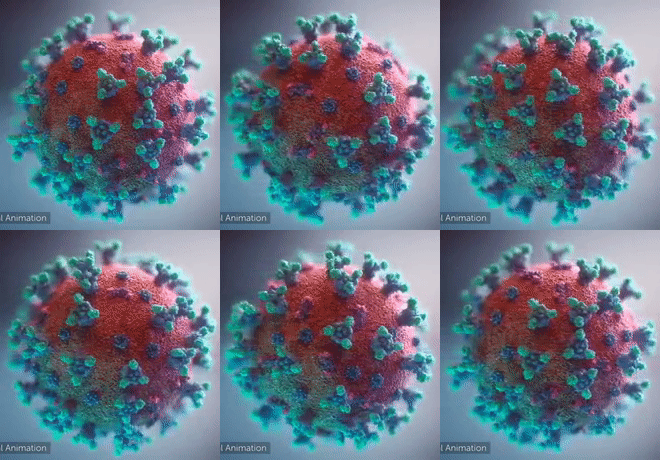
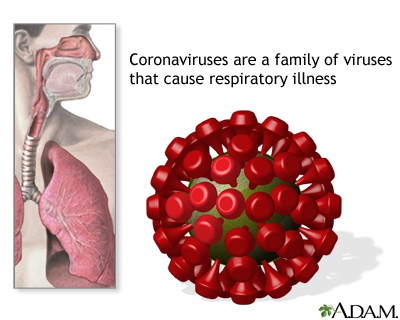
The spikes, that adorn the virus surface

Though COVID-19 is a new illness, a few clinical trials have explored the possibility that supplements may be effective. And, unfortunately, most of the evidence is unconvincing.

For example, a few observational studies link lower blood vitamin levels with a higher risk of testing positive for the virus that causes COVID-19 (see this study and this one). But studies like these cannot prove that vitamin D protects people against infection. Further, a randomized controlled study of people with moderate to severe COVID-19 who received a high dose of vitamin D showed no benefit. On the other hand, a small study of high-risk, elderly persons with COVID-19 found that rates of death at 14 days was lower among those receiving high dose vitamin D than those receiving a lower dose.

A 2021 study of zinc and vitamin C demonstrated no benefit for people with mild COVID-19. In this study, people whose symptoms did not require hospital admission were randomly assigned to receive

  • only vitamin C, 8,000 mg/day (the recommended daily amount is 75 mg/day for women and 90 mg/day for men)
  • only zinc, 50 mg/day (the recommended daily amount is 8 mg/day for women, 11 mg/day for men)
  • both supplements at the doses above
  • neither supplement.

The researchers found that people receiving the supplements, whether individually or combined, had no improvement in symptoms or a faster recovery when compared with otherwise similar patients receiving neither supplement.

Proponents of melatonin for COVID-19 have encouraged researchers to perform trials of this supplement, but so far convincing evidence of benefit is not yet available.

Even without convincing evidence, why not take them anyway?

Despite questions about the overall benefit of these supplements, many doctors began prescribing them routinely in the early days of the COVID-19 pandemic. The logic may have been that with so little known about how to best treat this new infection and a long track record of safety for these supplements, why not?

But there are significant hazards to consider. These include side effects, allergic reactions, interactions with other drugs, the cost of unnecessary supplements, and the dangers of taking too much. For example:

  • High doses of vitamin C may cause diarrhea or stomach upset. There have also been concerns that high-dose vitamin C supplementation may interfere with blood thinners or cholesterol-lowering medications.
  • High doses of vitamin D can cause severe symptoms, such as stomach upsets, kidney injury, and pancreatitis, and may even be life-threatening.

Reference:

  • yourhealth.net.au/articles/seasonal/colds-flu/common-cold
  • proteopedia.org/w/Coronavirus_Disease_2019_%28COVID-19%29
  • health.harvard.edu/blog/do-vitamin-d-zinc-and-other-supplements-help-prevent-covid-19-or-hasten-healing-2021040522310

See also: How to tell if your child has a cold or coronavirus

Watery eyes, a stuffy nose, sneezing: How long these symptoms last can be a clue to what’s causing your congestion.

Is it a cold or a sinus infection?

Sinusitis News, Articles and Research

If it’s a cold virus, you may find yourself close to a tissue box for several days. Most of the time, colds get better on their own in 10 days or less.

Cold Symptoms: Colds bring on a nasty mix of symptoms that can really wear you down.

  • Sore throat Cough Headache Stuffy nose Mucus buildup Sneezing Fatigue Swollen sinuses Fever (usually low-grade in adults but higher in children)

Sinusitis can be painful and debilitating. A few of the symptoms of a sinus infection to watch out for are:

  • headaches congestion sneezing coughing pain pressure burning loss of smell fever fatigue

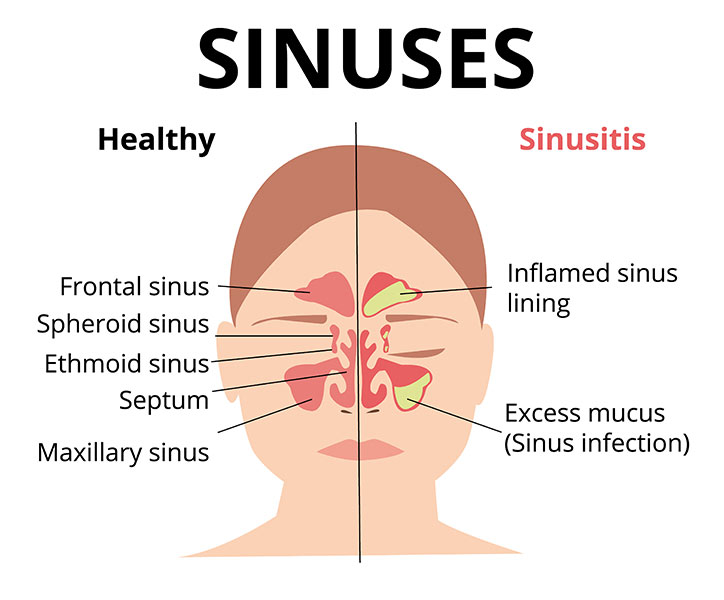
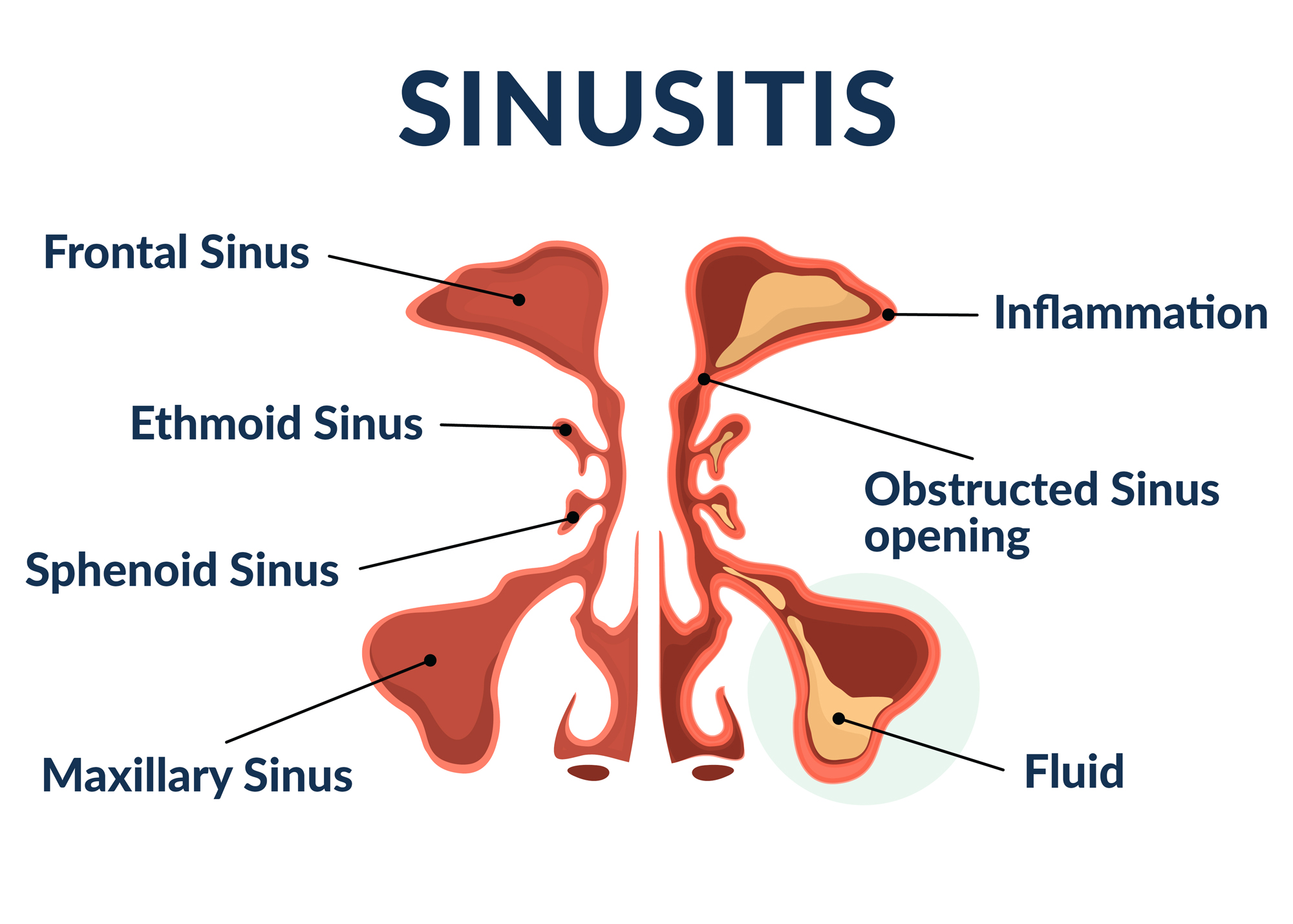
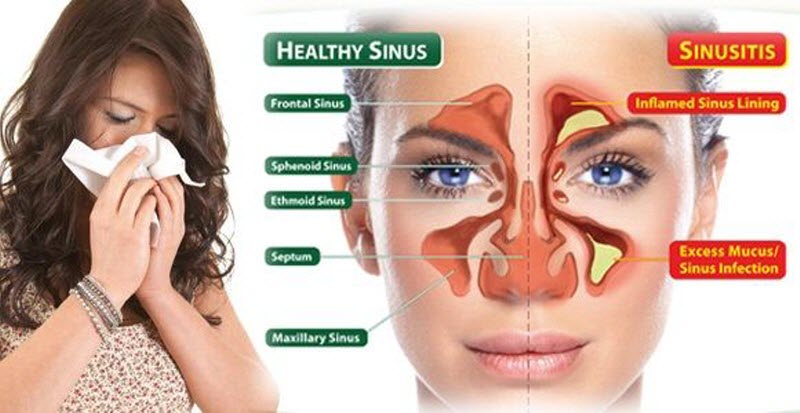
The sinuses are air-filled cavities that surround the nose and nasal passages. If these passages become inflamed, fluid can build up, and interfere with the drainage of mucus in the sinuses. This condition is called sinusitis. The sinus inflammation can be caused by infections from a virus, bacteria or fungus. A deviated nasal septum or other blockages can cause sinus infections and may be develop either acute or chronic sinusitis.

Sinusitis, also known as rhinosinusitis, is inflammation of the mucous membranes that line the sinuses resulting in symptoms that may include thick nasal mucus, a plugged nose, and facial pain. Other signs and symptoms may include fever, headaches, a poor sense of smell, sore throat, and a cough.

Chronic Sinusitis | Symptoms of Sinus Infection | Sinus Treatment
What Are Sinuses

Sinusitis can be caused by infection, allergies, air pollution, or structural problems in the nose. Most cases are caused by a viral infection.Recurrent episodes are more likely in persons with asthma, cystic fibrosis, and poor immune function. X-rays are not usually needed unless complications are suspected.In chronic cases, confirmatory testing is recommended by either direct visualization or computed tomography.

What are the different types of sinusitis?

  • Acute sinusitis usually starts with coldlike symptoms such as a runny, stuffy nose and facial pain. It may start suddenly and last 2 to 4 weeks.

  • Subacute sinus inflammation usually lasts 4 to 12 weeks.

  • Chronic inflammation symptoms last 12 weeks or longer.

  • Recurrent sinusitis happens several times a year.

By location eResearch by Navid Ajamin -- autumn 2019

The four paired paranasal sinuses are the frontal, ethmoidal, maxillary, and sphenoidal sinuses. The ethmoidal sinuses are further subdivided into anterior and posterior ethmoid sinuses, the division of which is defined as the basal lamella of the middle nasal concha. In addition to the severity of disease, discussed below, sinusitis can be classified by the sinus cavity it affects:

  • Maxillary – can cause pain or pressure in the maxillary (cheek) area (e.g., toothache, or headache)
  • Frontal – can cause pain or pressure in the frontal sinus cavity (located above the eyes), headache, particularly in the forehead
  • Ethmoidal – can cause pain or pressure pain between/behind the eyes, the sides of the upper part of the nose (the medial canthi), and headaches
  • Sphenoidal – can cause pain or pressure behind the eyes, but is often felt in the top of the head, over the mastoid processes, or the back of the head.

The sinuses are hollow cavities in the skull. They are divided into the frontal, maxillary, ethmoid and sphenoid sinuses. All sinuses are filled with air and, like the nose, are lined with a mucous membrane where a fine film of mucus is constantly formed. Their job is to stop dust, dirt particles or undesirable pathogens.

Sinuses become infected for a variety of reasons. Typically there is some sort of swelling or inflammation in the nose causing the lining inside the nose to swell and block the drainage pathway for the sinuses. Causes for swelling include a cold virus, inflammation from allergies, physical obstruction from bad anatomy or cold virus, inflammation from allergies, or physical obstruction from bad anatomy or growths such as polyps within the nose. Mucous collects inside the sinus when it is blocked.

Akut oder chronisch – was tun bei Nasennebenhöhlen-Entzündung?
All you need to know about Sinusitis

Bacteria from the nose then have a culture media to grow in. As bacteria find their way back into the sinus from the nose, they grow and replicate there, resulting in an infection.

Sinusitus | Sinus Infection | Premier Allergy, Asthma & Sinus Care

The mucus film, along with any particles of dirt that are breathed in are continuously transported towards the sinuses and throat by very fine hairs. This automatically keeps the area clean all the time. Having a cold can cause inflammation of the mucous membrane. It suddenly produces much more mucus and swells. This can obstruct the fine connections between the nose and the sinuses. The mucus cannot drain as well or cannot drain at all, which causes it to build up and become the ideal breeding ground for germs that can trigger acute sinusitis.

Sinusitis is the inflammation of the hollow cavities around the cheek bones, found behind the nose and around the eyes. Although more common in the winter, it can last for months — even years — if not properly treated. Allergy sufferers are also much more likely to develop chronic sinusitis than people without allergies.

Sinus Infection Symptoms:

  • Sinus pressure behind the eyes and the cheeks
  • A runny, stuffy nose that lasts more than a week
  • A worsening headache
  • A fever
  • Cough
  • Bad breath
  • Thick yellow or green mucus draining from your nose or down the back of your throat (postnasal drip)
  • Fatigue
  • Decreased sense of smell

Sinusitis is a common condition. It affects between about 10 and 30 percent of people each year in the United States and Europe.Chronic sinusitis affects about 12.5% of people. Treatment of sinusitis in the United States results in more than US$11 billion in costs. The unnecessary and ineffective treatment of viral sinusitis with antibiotics is common.

Acute Sinusitis | Getcured Apothecary Pvt Ltd

Sinusitis symptoms:

  • Facial pressure (especially around upper cheeks and nose)
  • Headaches
  • Fever
  • Postnasal drip and/or green or gray nasal discharge
  • Congestion
  • Cough

Distinguishing between a common viral infection (a common cold) of the nose and a true sinus infection is important. Antibiotics will not be beneficial for a viral infection, whereas a bacterial infection of the sinuses caused by a viral infection may be treated with antibiotics.

Some cases may be prevented by hand washing, avoiding smoking, and immunization. Pain killers such as naproxen, nasal steroids, and nasal irrigation may be used to help with symptoms. Recommended initial treatment for acute sinusitis is watchful waiting. If symptoms do not improve in 7–10 days or get worse, then an antibiotic may be used or changed. In those in whom antibiotics are used, either amoxicillin or amoxicillin/clavulanate is recommended first line.Surgery may occasionally be used in people with chronic disease.

Treatments to relieve symptoms

Your doctor may recommend treatments to help relieve sinusitis symptoms, including:

  • Saline nasal spray, which you spray into your nose several times a day to rinse your nasal passages.
  • Nasal corticosteroids. These nasal sprays help prevent and treat inflammation. Examples include fluticasone (Flonase Allergy Relief, Flonase Sensimist Allergy Relief, others), budesonide (Rhinocort Allergy), mometasone (Nasonex) and beclomethasone (Beconase AQ, Qnasl, others).
  • Decongestants. These medications are available in over-the-counter (OTC) and prescription liquids, tablets and nasal sprays. Use nasal decongestants for only a few days. Otherwise they may cause the return of more-severe congestion (rebound congestion).
  • Allergy medications. If your sinusitis is due to allergies, using allergy medications may help lessen allergy symptoms.
  • OTC pain relievers, such as acetaminophen (Tylenol, others), ibuprofen (Advil, Motrin IB, others) or aspirin.

    Use caution when giving aspirin to children or teenagers. Though aspirin is approved for use in children older than 3, children and teenagers recovering from chickenpox or flu-like symptoms should never take aspirin. This is because aspirin has been linked to Reye's syndrome, a rare but potentially life-threatening condition, in such children.

Antibiotics

Antibiotics usually aren't needed to treat acute sinusitis, because it's usually caused by a virus and not by bacteria. Even if your acute sinusitis is bacterial, it may clear up without treatment. Your doctor might wait and watch to see if your acute sinusitis worsens before prescribing antibiotics.

However, severe, progressive or persistent symptoms might require antibiotics. If your doctor prescribes an antibiotic, be sure to take the whole course, even after your symptoms get better. If you stop taking them early, your symptoms may recur.

Reference:

  • en.wikipedia.org/wiki/Sinusitis
  • ari.com/int/field-of-application/sinusitis
  • asternvaent.com/centersofexcellence/nose-sinus
  • ranchoent.com/treatment-for-sinus-disease-san-diego
  • webmd.com/cold-and-flu/features/cold-sinus-infections#1
  • webmd.com/allergies/qa/what-are-the-different-types-of-sinusitis
  • allergychoices.com/for-patients/allergy-related-conditions/sinusitis
  • mayoclinic.org/diseases-conditions/acute-sinusitis/diagnosis-treatment/drc-20351677

See also: 9 Ways to Get Rid of a Sinus Infection, Plus Tips for Prevention -- healthline.com

1- حداقل سی سانتیمتر از افرادی كه سرفه یا عطسه می كنند فاصله بگیرید.
قطره های ریز عطسه یا سرفه حدودا تا مسافت 30 سانتی متری پراكنده می شوند. دكتر دنیس موری ، پزشك اطفال از دانشكده پزشكی ایالت میشیگان، خاطر نشان می كند كه اگر یكی از این قطره ها روی چشم یا بینی شما قرار بگیرد، چند روز بعد به بیماری سرماخوردگی مبتلا می شوید . هرگاه در آسانسور با فردی كه سرفه می كند مواجه شدید، رویتان را برگردانید.

2- در هر فرصتی دست هایتان را بشویید.
اكثر میكروب های سرماخوردگی از طریق تماس فیزیكی غیرمستقیم منتقل می شوند. به طور مثال ، فرد بیماری كه ویروس سرماخوردگی را از بینی به دست هایش منتقل می كند، به هر شیئی كه دست بزند آن را آلوده می كند ( ویروس های سرماخوردگی به مدت 3 ساعت بر روی اشیاء ، زنده می مانند.) افرادی كه این اشیاء را لمس كنند و بعد بینی یا چشم هایشان را بمالند به بیماری مبتلا می شوند. پس نتیجه می گیریم كه شستشوی مدام دست ها مهم ترین كاری است كه می توانید برای پیشگیری از سرماخوردگی انجام دهید. بنابراین دست هایتان را در هر فرصتی بشویید.

3- در محیط هایی كه تهویه مناسب ندارد، از خودتان بیشتر مراقبت كنید.
ساختمان های اداری كه از تهویه هوای مناسب برخوردار نیستند یكی از محیط هایی محسوب می شوند كه خطر ابتلا به سرماخوردگی را افزایش می دهند، زیرا در این مكان ها ویروس سرماخوردگی راه خروج ندارد. بدتر از آن رطوبت كم است كه باعث خشكی مخاط بینی می شود، در نتیجه ، مخاط را برای شكار ویروس ها مستعد می سازد. به همین دلیل هواپیماها هم محیط های مشابه دیگری برای ابتلا به سرماخوردگی محسوب می شوند. دكتر مارگارت گرادیسون از انجمن پزشكی دانشگاه دوك می گوید: بهترین پادتن ، مرطوب كردن سوراخ های بینی با اسپری محتوی آب نمك مخصوص بینی است.

4- مایعات مختلف بنوشید.
نوشیدن مایعات گوناگون، میكروب های فعال سرماخوردگی را از بین می برند و همینطور از كمبود آب بدن كه معمولا با بیماری سرماخوردگی همراه است جلوگیری می كنند. تنفس از راه دهان ، دمیدن به داخل بینی و مصرف داروهای آبریزش بینی ، كمبود آب بدن را افزایش می دهد. برای مقابله با این كمبود ، حداقل روزی هشت لیوان آب، آب میوه و یا مایعات بدون كافئین بنوشید.

Ultimate Cold Fighting Strategies for Your Kids

5- از مالیدن بیش از حد چشم و بینی خودداری كنید.
با توجه به بررسی های انجام شده ، افراد در هنگام سرماخوردگی این اعضاء صورت خود را سه بار در ساعت می مالند. اگر احساس می كنید كه باید این كار را انجام دهید، بهتر است به جای نوك انگشت از بند انگشتانتان استفاده كنید، چون این قسمت كمتر به میكروب سرماخوردگی آلوده می شود.

6- از رختخواب بیرون بیایید و به ورزش بپردازید.
شما می توانید سه بار در هفته و به مدت 30 تا 45 دقیقه به انجام ورزش های ساده ، مثل پیاده روی و دوچرخه سواری بپردازید و با این كار مقاومت بخش بالایی مجرای تنفسی را نسبت به عفونت ها افزایش دهید.
7- اسكاچ های ظرفشویی را ضد عفونی كنید.
اكثر میكروب های سرماخوردگی در آشپزخانه منتقل می شوند. مهم ترین عامل اسكاچ های ظرفشویی هستند كه برای رشد و نمو میكروب های سرماخوردگی محیطی گرم و مرطوب را فراهم می كنند .
بهتر است برای جلوگیری از ابتلا به سرماخوردگی، روزی دو تا سه مرتبه این اشیاء را در جریان آب جوش قرار دهید. اگر یكی از اعضای خانواده بیماراست ، برای احتیاط بیشتر بهتر است تمام لوازم منزل را كه بیشتر با آنها در تماس هستند، ضدعفونی كنید.
8- ویتامین "e" مصرف كنید.
ویتامین "e " نقش مهمی در عملكرد سیستم ایمنی بدن ایفا می كند. اما از آنجایی كه این ویتامین بیشتر در مواد غذایی پرچرب وجود دارد ، افرادی كه رژیم لاغری دارند ، نمی توانند از آن استفاده كنند.
اكثر افراد برای افزایش توانایی بدنشان ، باید قرص ویتامین e را همراه با نهار و شام (غذاهای اصلی) مصرف كنند، البته مصرف قرص حتما باید تحت نظر پزشک باشد.
در مورد خاصیت ضد سرماخوردگی ویتامین "c" هیچ گونه شواهدی وجود ندارد. اما چند تحقیق حاكی از آن است كه این ویتامین تا اندازه ای دوره و شدت سرماخوردگی را كاهش می دهد. به خاطر داشته باشید، روزانه، بیشتر از 500 میلی گرم از آن مصرف نكنید، چون مصرف بیش از حد این ویتامین باعث اختلال در دستگاه گوارش می شود.

Can vitamin C stop a cold?

Popular belief is that vitamin C can cure the common cold. However, research about this claim is conflicting. Although not fully proven, large doses of vitamin C may help reduce how long a cold lasts.

Can zinc stop a cold?

There is no guarantee that zinc will help you feel better faster. In some studies, zinc did nothing to shorten how long people with colds felt bad. In other studies, zinc may have shortened symptoms by a few days. But the side effects from taking zinc can be uncomfortable or serious in some cases.

The advice is to source vitamin D from our diet. Foods rich in Vitamin A, such as carrots, sweet potatoes and spinach, can help reduce the severity of the common cold. This is because vitamin A helps to boost the body's immune system. Other nutrients can help the body to fight flu and colds.

In immune system studies on the elderly, participants who received 200 international units of vitamin E daily for 1 year were 20 percent less likely to suffer from upper respiratory infections, such as colds, than those who received placebos.

9- سرفه را تسكین دهید.
برای سرفه های خشك و تك سرفه ها از شربتی كه حاوی مواد التیام دهنده است استفاده كنید. برا ی سرفه هایی كه با خلط همراه است، از شربت سینه و داروی خلط آور استفاده كنید كه باعث می شود مقدار ترشح مخاطی افزایش یافته، در نتیجه فرد راحت تر سرفه كند.
10- خواب شبانه آرامی داشته باشید.
با توجه به تحقیقات انجام شده در مؤسسه بهداشت سنتیاگو، خواب خوب و آرام موجب تقویت سلول های سیستم ایمنی بدن می شود. در این بررسی ، 43 نفر ( افرادی كه به سرماخوردگی مبتلا نبوده اند) به طور داوطلبانه تنها نیمی از شب را در خواب سپری كردند. فردای آن روز 30% از سلول های مدافع بدن آنها از بین رفتند .اما شب بعد، زمانی كه این افراد ، حداقل هشت ساعت را در خواب سپری كردند، سلول های نابود كننده بدن آنها كاملاً مقاوم شدند.

The signs and symptoms of a cold usually begin one to two days after exposure. In children, nasal congestion is the most prominent symptom. Children can also have clear, yellow, or green-colored nasal discharge. Fever (temperature higher than 100.4°F or 38°C) is common during the first three days of the illness.

It's normal for a child to have 8 or more colds a year.

This is because there are hundreds of different cold viruses and young children have no immunity to any of them as they have never had them before.They gradually build up immunity and get fewer colds.

Most colds get better in 5 to 7 days but can take up to 2 weeks in small children.

Here are some suggestions for how to ease the symptoms in your child:

  • Make sure your child drinks plenty of fluids.
  • Saline nose drops can help loosen dried snot and relieve a stuffy nose. Ask a pharmacist, GP or health visitor about them.
  • If your child has a high temperature, pain or discomfort, children's paracetamol or ibuprofen can help. Children with asthma may not be able to take ibuprofen, so check with a pharmacist, GP or health visitor first. Always follow the instructions on the packet.
  • Encourage the whole family to wash their hands regularly to stop the cold spreading.

Related image

11- از بازكننده های (مجرای بینی و سینه) مناسب استفاده كنید.
برای التیام گرفتگی بینی ، بهتر است از اسپری و قطره های باز كننده استفاده كنید، زیرا این نوع داروها علائم بیماری را سریع تر از داروهای خوراكی از بین می برند و نیز اثرات جانبی كمتری را به دنبال دارند. داروهای خوراكی باعث افزایش ضربان قلب می شوند. بنابراین افرادی كه مبتلا به فشار خون بالا با بیماری هستند. نباید از آنها استفاده كنند.
بازكننده های بوییدنی را نباید بیش از سه روز پیاپی مصرف كرد، چون ممكن است اثر این دارو كاهش یابد و گرفتگی بینی بدتر از قبل شود.

12- گلودرد را تسكین دهید.
دكتر موری از ایالت میشیگان معتقد است غرغره كردن با آب نمك گرم برای تسكین گلودرد فوق العاده مؤثر است(یك قاشق چای خوری نمك برای هر لیوان آب) .
او می گوید :هیچ گونه شواهدی وجود ندارد كه برای التیام درد مكیدن آب نبات های دارویی معمولی از آب نبات های سفت و محكم بهتراست. هر دوی این مواد ، مقدار بزاق دهان را افزایش داده و سطح گلو را پوشش می دهند .
به همین دلیل است كه نوشیدن "چای و عسل" برای التیام گلو درد تأثیر بسزایی دارد. آب نبات های دارویی حاوی " منتول" بهتر از آب نبات های سفت و محكم كارایی دارند، چون باعث بی حسی گلو می شوند.

13- در هر وعده از غذاهای اصلی "نهار و شام"، سوپ كم چربی بخورید.
مایعات گرم در بی اثر كردن ویروس سرماخوردگی نقش مهمی را ایفا می كنند و نوعی مُسكن محسوب می شوند. سوپ جوجه برای تسكین این بیماری تأثیر فوق العاده ای دارد. این سوپ حاوی پروتئین ، ویتامین و مواد معدنی است ، كه همگی به از بین بردن ویروس سرماخوردگی كمك می كنند.
در هنگام سرماخوردگی سعی كنید آرام و آهسته سرفه كنید تا سرماخوردگی شما به دیگران منتقل نشود . این اصل را به كودكانتان نیز آموزش دهید.

اگر هر فردی اصول ساده بهداشتی را رعایت كند، مطمئناً به نتایج فوق العاده ای در این زمینه خواهد رسید.


Reference:

  • parsiking.com
  • medlineplus.gov/ency/article/002145.htm
  • uptodate.com/contents/the-common-cold-in-children-beyond-the-basics
  • nhs.uk/conditions/baby/health/colds-coughs-and-ear-infections-in-children
  • mayoclinic.org/diseases-conditions/common-cold/expert-answers/zinc-for-colds

healthy4you.blogfa.com
Health & Wellness وبلاگ تخصصی سلامت شامل مجموعه مطالب پزشکی است و اطلاعات مفیدی در رابطه با بهداشت، ایمنی، سلامتی بدن و راه های پیشگیری از بیماریها را در اختیار شما کاربر محترم می گزارد.

eMail: navid.aj@gmail.com
نوید عجمین Navid Ajamin
همیشه سلامت باشید...

unicef for every child

شمارنده