Watery eyes, a stuffy nose, sneezing: How long these symptoms last can be a clue to what’s causing your congestion.
Is it a cold or a sinus infection?

If it’s a cold virus, you may find yourself close to a tissue box for several days. Most of the time, colds get better on their own in 10 days or less.
Cold Symptoms: Colds bring on a nasty mix of symptoms that can really wear you down.
- Sore throat Cough Headache Stuffy nose Mucus buildup Sneezing Fatigue Swollen sinuses Fever (usually low-grade in adults but higher in children)
Sinusitis can be painful and debilitating. A few of the symptoms of a sinus infection to watch out for are:
- headaches congestion sneezing coughing pain pressure burning loss of smell fever fatigue
The sinuses are air-filled cavities that surround the nose and nasal passages. If these passages become inflamed, fluid can build up, and interfere with the drainage of mucus in the sinuses. This condition is called sinusitis. The sinus inflammation can be caused by infections from a virus, bacteria or fungus. A deviated nasal septum or other blockages can cause sinus infections and may be develop either acute or chronic sinusitis.
Sinusitis, also known as rhinosinusitis, is inflammation of the mucous membranes that line the sinuses resulting in symptoms that may include thick nasal mucus, a plugged nose, and facial pain. Other signs and symptoms may include fever, headaches, a poor sense of smell, sore throat, and a cough.
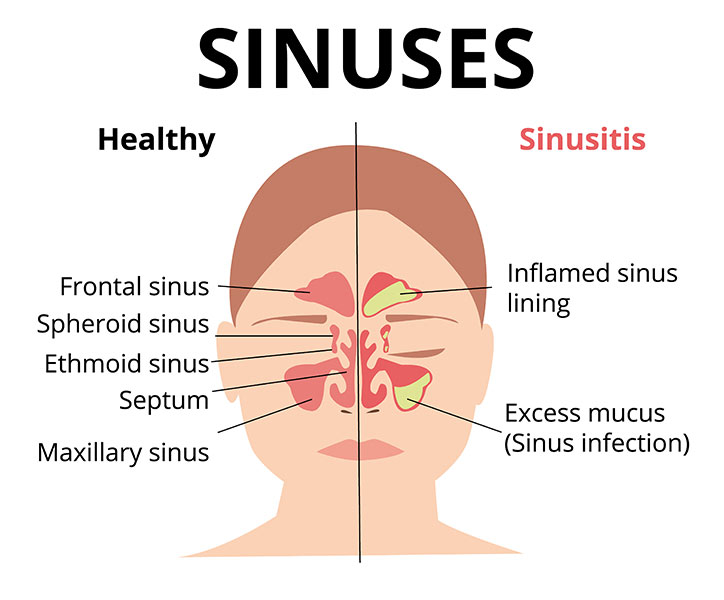
Sinusitis can be caused by infection, allergies, air pollution, or structural problems in the nose. Most cases are caused by a viral infection.Recurrent episodes are more likely in persons with asthma, cystic fibrosis, and poor immune function. X-rays are not usually needed unless complications are suspected.In chronic cases, confirmatory testing is recommended by either direct visualization or computed tomography.
What are the different types of sinusitis?
Acute sinusitis usually starts with coldlike symptoms such as a runny, stuffy nose and facial pain. It may start suddenly and last 2 to 4 weeks.
Subacute sinus inflammation usually lasts 4 to 12 weeks.
Chronic inflammation symptoms last 12 weeks or longer.
Recurrent sinusitis happens several times a year.
By location eResearch by Navid Ajamin -- autumn 2019
The four paired paranasal sinuses are the frontal, ethmoidal, maxillary, and sphenoidal sinuses. The ethmoidal sinuses are further subdivided into anterior and posterior ethmoid sinuses, the division of which is defined as the basal lamella of the middle nasal concha. In addition to the severity of disease, discussed below, sinusitis can be classified by the sinus cavity it affects:
- Maxillary – can cause pain or pressure in the maxillary (cheek) area (e.g., toothache, or headache)
- Frontal – can cause pain or pressure in the frontal sinus cavity (located above the eyes), headache, particularly in the forehead
- Ethmoidal – can cause pain or pressure pain between/behind the eyes, the sides of the upper part of the nose (the medial canthi), and headaches
- Sphenoidal – can cause pain or pressure behind the eyes, but is often felt in the top of the head, over the mastoid processes, or the back of the head.
The sinuses are hollow cavities in the skull. They are divided into the frontal, maxillary, ethmoid and sphenoid sinuses. All sinuses are filled with air and, like the nose, are lined with a mucous membrane where a fine film of mucus is constantly formed. Their job is to stop dust, dirt particles or undesirable pathogens.
Sinuses become infected for a variety of reasons. Typically there is some sort of swelling or inflammation in the nose causing the lining inside the nose to swell and block the drainage pathway for the sinuses. Causes for swelling include a cold virus, inflammation from allergies, physical obstruction from bad anatomy or cold virus, inflammation from allergies, or physical obstruction from bad anatomy or growths such as polyps within the nose. Mucous collects inside the sinus when it is blocked.

Bacteria from the nose then have a culture media to grow in. As bacteria find their way back into the sinus from the nose, they grow and replicate there, resulting in an infection.
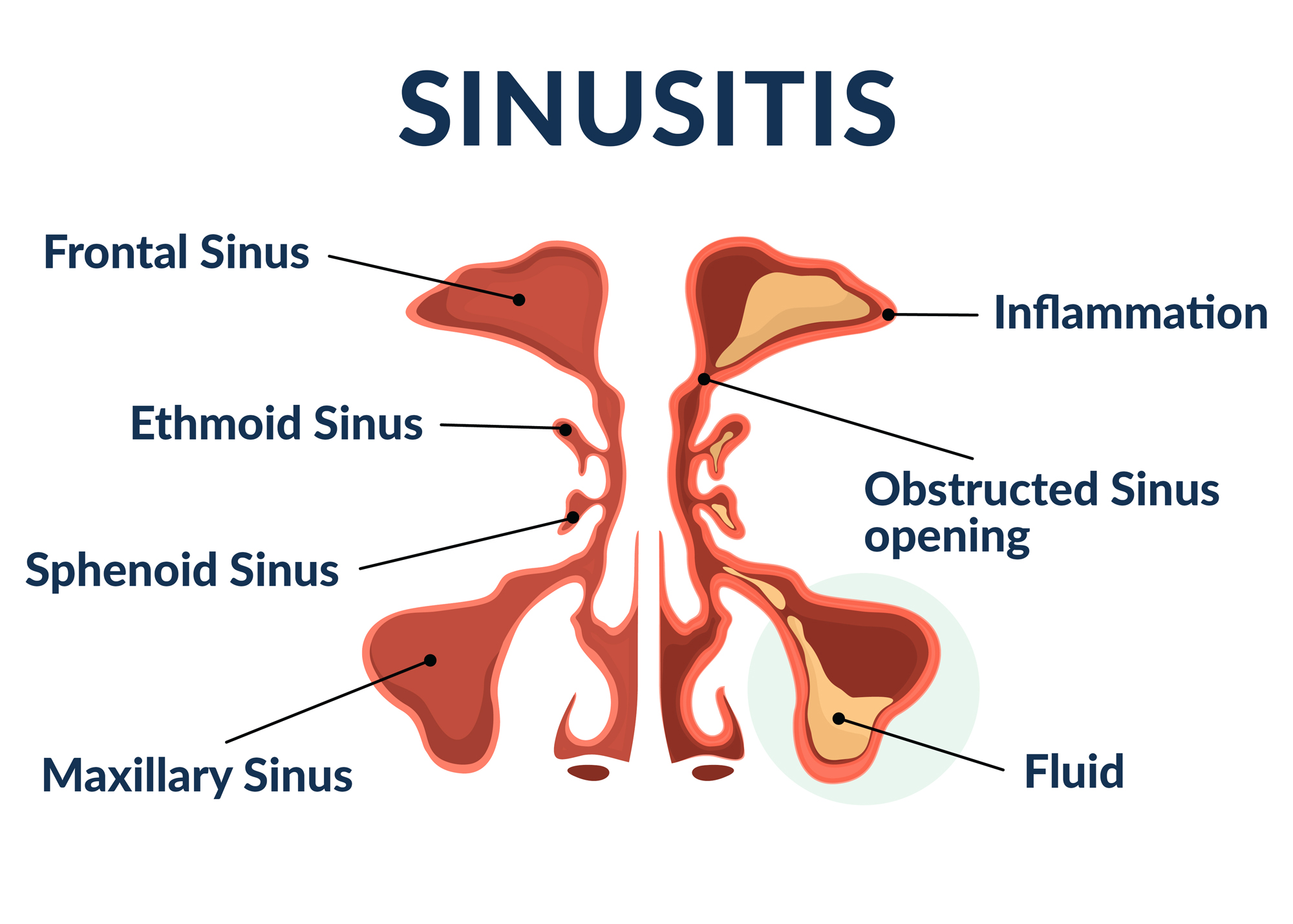
The mucus film, along with any particles of dirt that are breathed in are continuously transported towards the sinuses and throat by very fine hairs. This automatically keeps the area clean all the time. Having a cold can cause inflammation of the mucous membrane. It suddenly produces much more mucus and swells. This can obstruct the fine connections between the nose and the sinuses. The mucus cannot drain as well or cannot drain at all, which causes it to build up and become the ideal breeding ground for germs that can trigger acute sinusitis.
Sinusitis is the inflammation of the hollow cavities around the cheek bones, found behind the nose and around the eyes. Although more common in the winter, it can last for months — even years — if not properly treated. Allergy sufferers are also much more likely to develop chronic sinusitis than people without allergies.
Sinus Infection Symptoms:
- Sinus pressure behind the eyes and the cheeks
- A runny, stuffy nose that lasts more than a week
- A worsening headache
- A fever
- Cough
- Bad breath
- Thick yellow or green mucus draining from your nose or down the back of your throat (postnasal drip)
- Fatigue
- Decreased sense of smell
Sinusitis is a common condition. It affects between about 10 and 30 percent of people each year in the United States and Europe.Chronic sinusitis affects about 12.5% of people. Treatment of sinusitis in the United States results in more than US$11 billion in costs. The unnecessary and ineffective treatment of viral sinusitis with antibiotics is common.
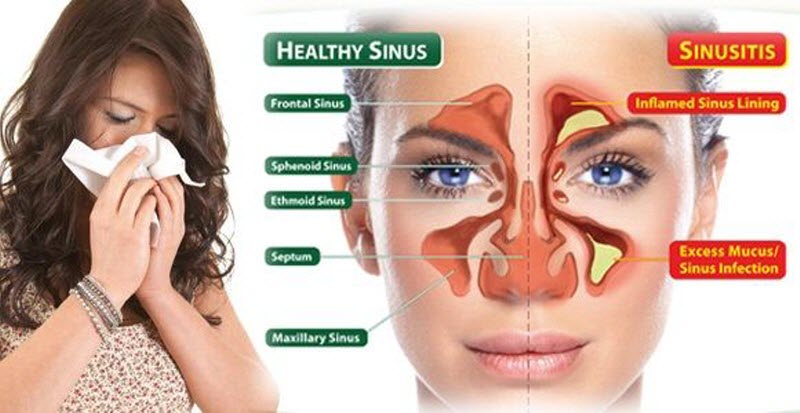
Sinusitis symptoms:
- Facial pressure (especially around upper cheeks and nose)
- Headaches
- Fever
- Postnasal drip and/or green or gray nasal discharge
- Congestion
- Cough
Distinguishing between a common viral infection (a common cold) of the nose and a true sinus infection is important. Antibiotics will not be beneficial for a viral infection, whereas a bacterial infection of the sinuses caused by a viral infection may be treated with antibiotics.
Some cases may be prevented by hand washing, avoiding smoking, and immunization. Pain killers such as naproxen, nasal steroids, and nasal irrigation may be used to help with symptoms. Recommended initial treatment for acute sinusitis is watchful waiting. If symptoms do not improve in 7–10 days or get worse, then an antibiotic may be used or changed. In those in whom antibiotics are used, either amoxicillin or amoxicillin/clavulanate is recommended first line.Surgery may occasionally be used in people with chronic disease.
Treatments to relieve symptoms
Your doctor may recommend treatments to help relieve sinusitis symptoms, including:
- Saline nasal spray, which you spray into your nose several times a day to rinse your nasal passages.
- Nasal corticosteroids. These nasal sprays help prevent and treat inflammation. Examples include fluticasone (Flonase Allergy Relief, Flonase Sensimist Allergy Relief, others), budesonide (Rhinocort Allergy), mometasone (Nasonex) and beclomethasone (Beconase AQ, Qnasl, others).
- Decongestants. These medications are available in over-the-counter (OTC) and prescription liquids, tablets and nasal sprays. Use nasal decongestants for only a few days. Otherwise they may cause the return of more-severe congestion (rebound congestion).
- Allergy medications. If your sinusitis is due to allergies, using allergy medications may help lessen allergy symptoms.
OTC pain relievers, such as acetaminophen (Tylenol, others), ibuprofen (Advil, Motrin IB, others) or aspirin.
Use caution when giving aspirin to children or teenagers. Though aspirin is approved for use in children older than 3, children and teenagers recovering from chickenpox or flu-like symptoms should never take aspirin. This is because aspirin has been linked to Reye's syndrome, a rare but potentially life-threatening condition, in such children.
Antibiotics
Antibiotics usually aren't needed to treat acute sinusitis, because it's usually caused by a virus and not by bacteria. Even if your acute sinusitis is bacterial, it may clear up without treatment. Your doctor might wait and watch to see if your acute sinusitis worsens before prescribing antibiotics.
However, severe, progressive or persistent symptoms might require antibiotics. If your doctor prescribes an antibiotic, be sure to take the whole course, even after your symptoms get better. If you stop taking them early, your symptoms may recur.
Reference:
- en.wikipedia.org/wiki/Sinusitis
- ari.com/int/field-of-application/sinusitis
- asternvaent.com/centersofexcellence/nose-sinus
- ranchoent.com/treatment-for-sinus-disease-san-diego
- webmd.com/cold-and-flu/features/cold-sinus-infections#1
- webmd.com/allergies/qa/what-are-the-different-types-of-sinusitis
- allergychoices.com/for-patients/allergy-related-conditions/sinusitis
- mayoclinic.org/diseases-conditions/acute-sinusitis/diagnosis-treatment/drc-20351677
See also: 9 Ways to Get Rid of a Sinus Infection, Plus Tips for Prevention -- healthline.com
 وبلاگ تخصصی سلامت شامل مجموعه مطالب پزشکی است و اطلاعات مفیدی در رابطه با بهداشت، ایمنی، سلامتی بدن و راه های پیشگیری از بیماریها را در اختیار شما کاربر محترم می گزارد.
