What is puberty in simple words?
Puberty is the process of physical maturation where an adolescent reaches sexual maturity and becomes capable of reproduction. On average,
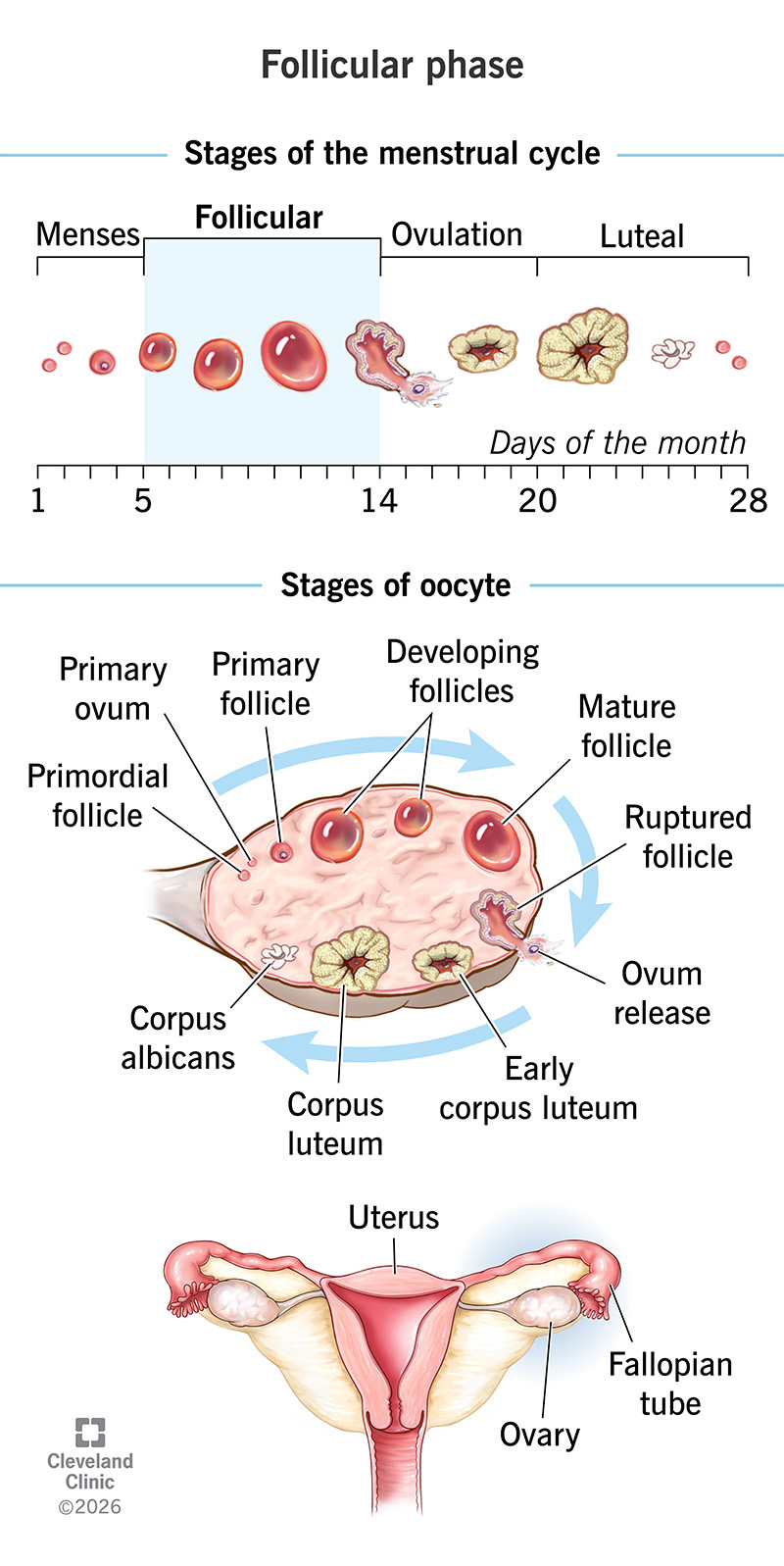
puberty typically begins between 8 and 13 in females and 9 and 14 in males.
If your child doesn't ask questions about periods, you can bring it up. By the time they're 6 or 7 years old, most kids can understand the basics of periods. Look for a natural moment to talk about it, such as: when kids asks about puberty or changing bodies.
Emotional changes that occur during puberty:
- Feeling overly sensitive
- Looking for an identity
- Feeling uncertain
- Peer pressure
- Conflicting thoughts
- Mood swings
- Feeling conscious about self
- Getting sexual feelings
Puberty is the time when all your major organs and body systems mature. At the end of puberty, you are sexually and reproductively mature. The growth and development that occurs during puberty is prompted by changes in the levels of certain hormones in your body.
Sexual arousal can begin for some people shortly before puberty. Children as young as 10 to 13 may experience sexual attraction or excitement. One study shows that people report experiencing their first orgasm around age 13 to 17. Other studies show it's normal for children as young as 7 to begin feeling sexual desire.
This is the persistent or recurrent deficiency or absence of sexual fantasies and desire for sexual activity. It's often referred to as having a low libido and can cause significant distress and relationship problems.
Women in their 20s to 30s experience a peak in sexual desire due to the active function of the ovaries, which produce high levels of the estrogen hormone responsible for female beauty. However, the secretion of this hormone decreases as the body enters perimenopause, typically from the age of 40 onward.
Being unable to enjoy or not wanting to engage in sexual activities may be a sign of sexual dysfunction. It's very common and highly treatable. Things like stress, health conditions, medication or past sexual trauma can cause it. Sexual dysfunction can happen at any point during the sexual response cycle.
Is it normal for women to have stronger sexual desires before their period?
It's perfectly normal to feel an increased sex drive in the days leading up to your period, whether it happens monthly or occasionally.
Apocrine glands are concentrated in areas abundant in hair follicles, such as the armpits and groin. These glands become active during puberty and produce a thicker, milky sweat that contains proteins and lipids. Unlike eccrine sweat, apocrine sweat is secreted into the hair follicle before it reaches the skin surface.
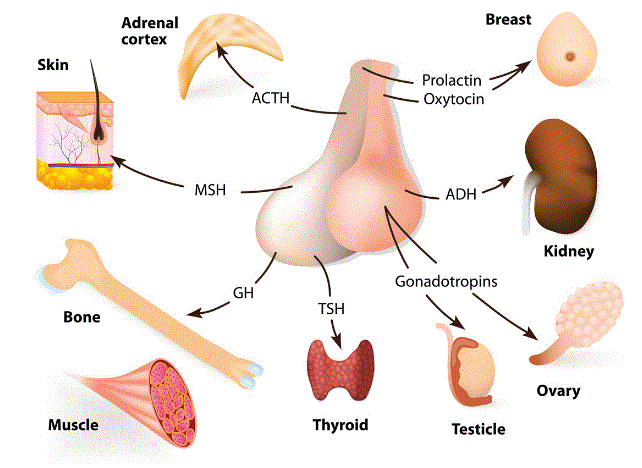
Increased growth hormone production from the pituitary gland—as a results of sex hormones—leads to the pubertal growth spurt. The adrenal glands (two small glands located above the kidneys) also play a role in producing sex steroids (adrenarche).

Vaginal discharge begins to appear as a sign of puberty and there will be a phenomenon of increased vaginal discharge before the menstrual period. The amount of vaginal discharge will change depending on age as well as female hormone levels.
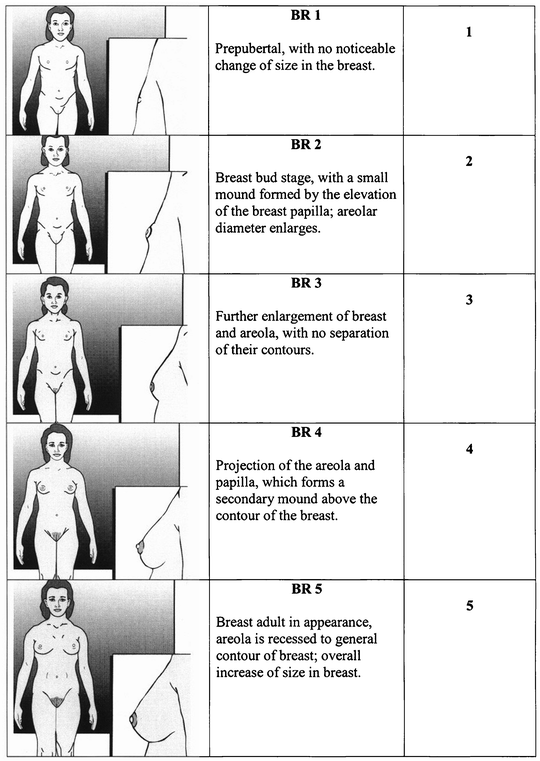
Puberty is a time of rapid and complex changes involving overlapping components: hormonal, physical, and cognitive. Tanner Staging, also known as Sexual Maturity Rating (SMR), is an objective classification system that providers use to document and track the development and sequence of secondary sex characteristics of children during puberty.
It was developed by Marshall and Tanner while conducting a longitudinal study from the 1940s to the 1960s in England.
Based on observational data, they developed separate scales for the development of external genitalia: phallus, scrotum, and testes volume in males, breasts in females, and pubic hair in both males and females.
The physical changes of puberty require a concerted effort from many organs; these changes are initiated by activating the hypothalamic-pituitary-gonadal (HPG) axis (gonads refer to ovaries in females and testes in males). The first hormonal change in puberty is the pulsatile release of GnRH triggered by disinhibition of the hypothalamic-pituitary-gonadal (HPG) axis.

Although the cause of this disinhibition is largely unknown, the subsequent release of GnRH stimulates the pulsatile release of luteinizing hormone (LH) and follicle-stimulating hormone (FSH). LH and FSH act on specific gonadal cells to stimulate the release of androgens, estrogens, and gametogenesis. LH stimulates the theca cells in the ovary to produce estrogen precursors and the Leydig cells of the testes to produce testosterone.


On the other hand, FSH works on the ovarian follicle to convert the thecal estrogen precursors to estrogen and on the Sertoli cells in the seminiferous tubules of the testes to help create sperm. This complex process leads to increased estrogen and testosterone production that then facilitates the development of breasts and the formation of adult male genitalia.
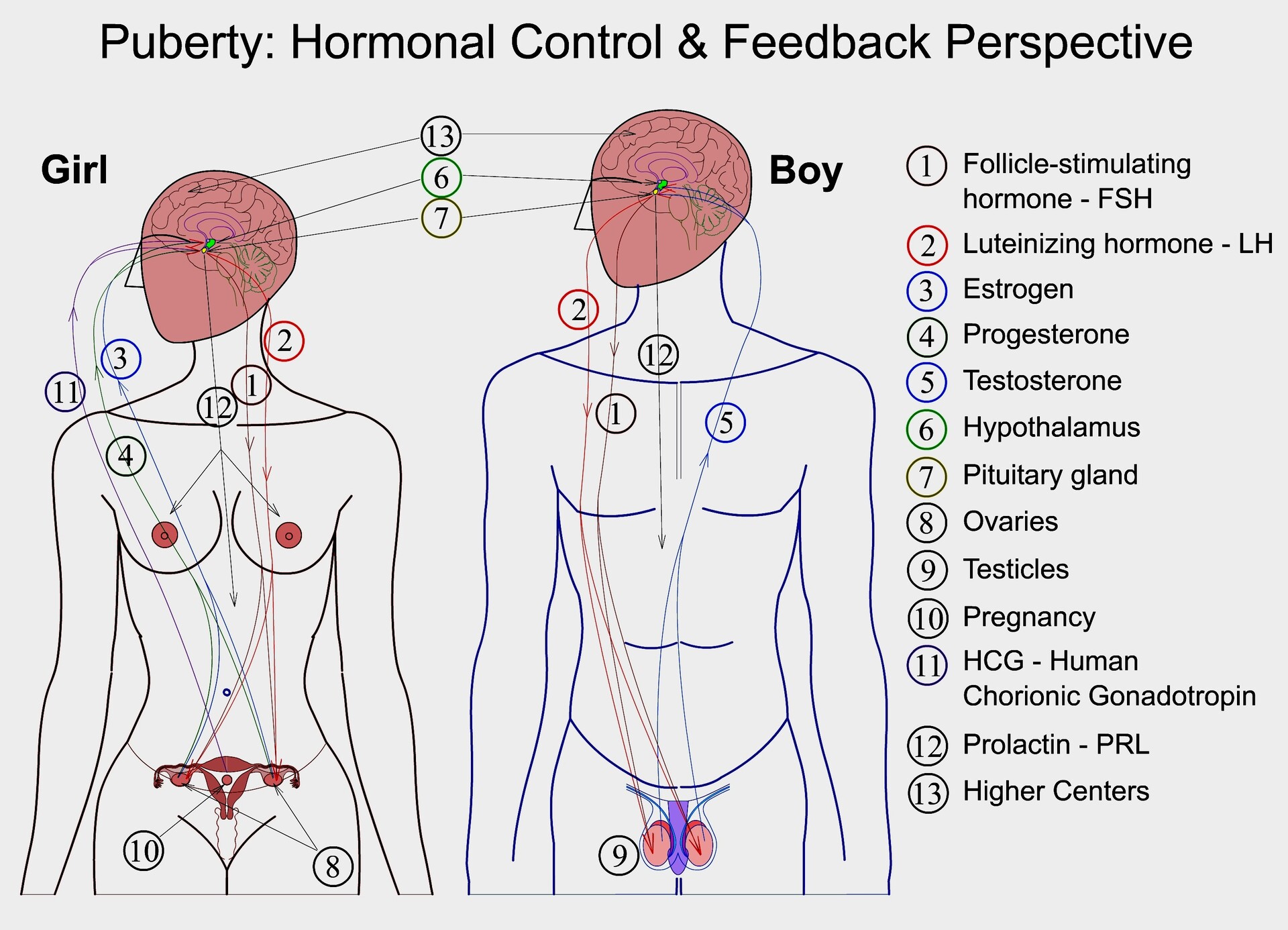
The adrenal glands also contribute to the formation of secondary sex characteristics, particularly pubarche, which is the development of pubic and axillary hair. Although adrenal maturation often coincides with HPG axis maturation, it is important to note that these processes occur independently and that pubarche itself is not the best indicator of pubertal development.
Causes of early or delayed puberty:

Diets high in meat, dairy products, and processed plant-based foods have been associated with an earlier onset of menstruation, while vegetarian diets and vigorous physical activity are known to delay the onset of menstruation. The earlier and more intense hormonal activity contributes to an earlier onset of puberty.
In females delayed puberty is defined as either lack of breast development (Tanner I) at age 13 years or absent menses at age 16 years. Most adolescents and young adults (AYAs) with delayed pubertal onset will spontaneously initiate and complete puberty without intervention – albeit later than their peers.

Precocious puberty is defined as the onset of secondary sexual characteristics before age 8 in girls and before age 9 in boys. This definition, endorsed by major pediatric and endocrine societies, remains the standard threshold for initiating further evaluation.
Some of the conditions that can cause early or delayed puberty include: problems with the ovaries, testicles or hormones. certain conditions, such as cystic fibrosis or diabetes. damage to the brain – from surgery, radiotherapy, infection or a severe head injury, for example.
How much delay in period is normal?
1-7 days late: Variations within a week stay normal for many people. Cycles can naturally fluctuate by several days from month to month. 8-14 days late: At more than a week overdue, your period qualifies as late. If you're sexually active and could be pregnant, take a pregnancy test.
Conditions associated with low GnRH levels in females include:
- Abnormal menstruation or amenorrhea (missed periods)
- Anovulation (no ovulation)
- Delayed sexual maturation and puberty
- Female infertility
- Low sex drive (hypogonadism)
What does psychosexual dysfunction mean?
If you experience problems getting sexually aroused or feeling sexual satisfaction, you may have a mental or emotional condition called psychosexual dysfunction.
Mental or emotional causes include: Depression. Anxiety. Traumatic sexual experience, such as abuse or rape.
Feelings of guilt, shame, stress, and negative body image may develop afterward.
They may arise due to anxiety, nervousness, worry, fear, distorted body image, physical or emotional trauma. In addition, ignorance, misinformation, superstition, and improper sex education contribute toward these disorders.
Does puberty cause emotional problems?
Your teen's moods can change quickly during puberty. This happens for a few reasons: Hormones — changing levels of hormones like estrogen and testosterone can affect emotions and sometimes lead to mood swings. Brain changes — the parts of the brain that control feelings and decision-making grow at different speeds.
How to know if puberty has ended?
Periods usually start around two years after breasts start to bud or pubic hair starts to grow. If periods haven't started three years after puberty began, make an appointment with your child's healthcare provider. Stage 5 is the final phase. Development typically ends in this stage. Girls reach physical adulthood.
Reference:
- ncbi.nlm.nih.gov/books/NBK470280
- pmc.ncbi.nlm.nih.gov/articles/PMC4886584
- samphireneuro.com/blog/how-late-can-a-period-be
- uvahealth.com/treatments/psychosexual-dysfunction
- betterhealth.vic.gov.au/health/healthyliving/puberty
- menstrupedia.com/articles/puberty/emotional-changes?
- my.clevelandclinic.org/health/body/22525-gonadotropin-releasing-hormone
See also:
- Can pre-puberty cause anxiety?
- What are the tanner stages of puberty?
- Can early puberty cause behavior problems?
- What do boys/girls need to know about puberty?
- Sex education guidance to undergo revamp for the 'mobile age'
- Pubertal Development, Emotion Regulatory Styles, and the Emergence of Sex Differences in Internalizing Disorders and Symptoms in Adolescence
 وبلاگ تخصصی سلامت شامل مجموعه مطالب پزشکی است و اطلاعات مفیدی در رابطه با بهداشت، ایمنی، سلامتی بدن و راه های پیشگیری از بیماریها را در اختیار شما کاربر محترم می گزارد.

